Back to all posts
Cognitive or Neuro Support

DSIP (DELTA SLEEP-INDUCING PEPTIDE): BENEFITS, DOSAGE, AND RECOVERY POTENTIAL

June 10, 2026

Sleep is one of the most important pillars of recovery, performance, hormone balance, and overall health. While many supplements focus on improving rest through sedation or circadian support, very few compounds directly target the neurochemical architecture of deep sleep itself. That’s where DSIP (Delta Sleep-Inducing Peptide) stands apart.

Originally discovered in the 1970s during research on slow-wave sleep, DSIP is a naturally occurring neuropeptide associated with:

→ Deep restorative sleep
→ Stress regulation
→ Hormone balance
→ Recovery and tissue repair

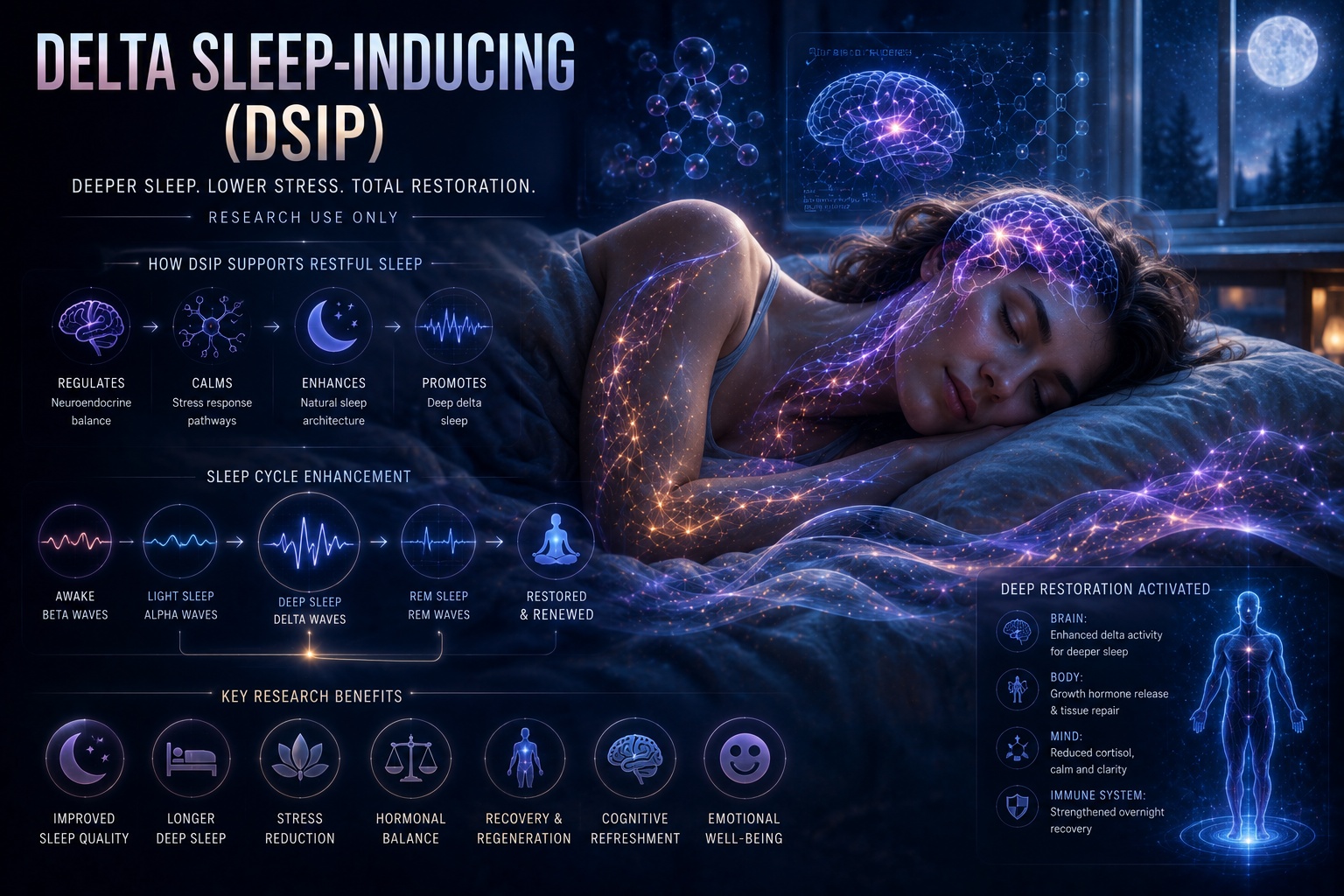
Unlike traditional sleeping pills that primarily sedate the nervous system, DSIP appears to work by supporting the body’s natural sleep patterns — particularly delta sleep, the deepest and most restorative phase of the sleep cycle.

In this guide, we’ll break down:

→ What DSIP is
→ How it works
→ Benefits for sleep and recovery
→ Potential risks and side effects
→ Dosage and administration
→ Comparisons with melatonin and other sleep aids
→ Legal status and research limitations

—

# What Is DSIP?

DSIP stands for Delta Sleep-Inducing Peptide, a naturally occurring neuropeptide first isolated from the blood of rabbits experiencing deep slow-wave sleep.

—

## → Structure and Classification

DSIP is:

→ A short peptide made of 9 amino acids
→ A neuroregulatory peptide connected to sleep and stress pathways
→ One of the earliest peptides studied specifically for sleep architecture

Because of its small structure, DSIP is often discussed alongside other recovery and regulatory peptides.

—

## → Natural Role in the Body

Research suggests DSIP may influence:

→ Sleep regulation
→ Cortisol balance
→ Growth hormone secretion
→ Luteinizing hormone (LH) signaling
→ Stress adaptation

Although the exact biological role remains partially unclear, DSIP appears closely linked to the body’s restorative and recovery systems.

—

## → Synthetic DSIP

The versions commonly discussed in peptide research are synthetic forms designed to mimic the naturally occurring peptide.

Most interest surrounding DSIP centers around:

→ Sleep quality
→ Athletic recovery
→ Nervous system regulation
→ Stress resilience

—

# How DSIP Works

Unlike sedatives that force the brain into sleep, DSIP appears to influence the natural structure and quality of sleep.

—

## → Deep Sleep Enhancement

DSIP is most strongly associated with promoting slow-wave (delta) sleep, the deepest stage of the sleep cycle.

Delta sleep is responsible for:

→ Physical recovery
→ Tissue repair
→ Memory consolidation
→ Hormonal restoration

This is one reason athletes and recovery-focused users are particularly interested in DSIP.

—

## → Cortisol and Stress Regulation

Research suggests DSIP may help normalize elevated cortisol levels.

Potential effects may include:

→ Reduced stress response
→ Improved nervous system recovery
→ Better resilience to overtraining and chronic stress

—

## → Hormonal Influence

DSIP has also been linked to changes in:

→ Growth hormone (GH) release
→ Luteinizing hormone (LH) secretion

Because deep sleep itself is closely connected to GH production, DSIP’s effects on sleep architecture may indirectly support:

→ Recovery
→ Lean tissue repair
→ Fat metabolism

—

## → Neurological Effects

Some studies suggest DSIP may interact with:

→ GABAergic systems
→ NMDA receptor pathways

These systems are heavily involved in:

→ Relaxation
→ Mood regulation
→ Nervous system calmness
→ Sleep initiation and maintenance

—

# Benefits of DSIP

Although DSIP remains experimental, both research and anecdotal reports suggest several potential benefits.

—

## → 1. Deeper, More Restorative Sleep

DSIP’s primary attraction is its ability to support slow-wave sleep.

Users often report:

→ Better sleep quality
→ Fewer nighttime awakenings
→ Feeling more rested upon waking

—

## → 2. Improved Recovery

Because deep sleep is essential for tissue repair and hormone regulation, DSIP may support:

→ Muscle recovery
→ Connective tissue repair
→ Reduced recovery time after training

—

## → 3. Cortisol and Stress Support

Chronic stress and elevated cortisol can impair:

→ Sleep
→ Recovery
→ Body composition
→ Cognitive performance

DSIP’s proposed cortisol-balancing effects may help reduce stress-related recovery issues.

—

## → 4. Growth Hormone Support

Some evidence suggests DSIP may indirectly enhance GH secretion through improvements in deep sleep and neuroendocrine regulation.

This makes DSIP particularly interesting in:

→ Recovery protocols
→ Longevity research
→ Athletic performance settings

—

## → 5. Potential Mood and Cognitive Benefits

By improving sleep and reducing stress load, DSIP may contribute to:

→ Improved focus
→ Better mood stability
→ Reduced mental fatigue

—

## → 6. Pain and Nervous System Regulation

Early studies suggest DSIP may possess mild analgesic properties.

Potential mechanisms may involve:

→ Nervous system calming
→ Reduced stress-related pain signaling

—

# DSIP Dosage and Administration

Because DSIP is still considered a research peptide, there are no official medical dosing guidelines.

—

## → Typical Research Dosage

Common experimental protocols range between:

→ 100–500 mcg per injection

—

## → Administration Method

DSIP is most commonly administered through:

→ Subcutaneous injection

Similar to many peptide protocols.

—

## → Timing

Most protocols recommend:

→ 30–60 minutes before bedtime

to align with the body’s natural sleep cycle.

—

## → Frequency of Use

Research-style approaches vary:

→ As-needed use for sleep issues
→ Short-term cycles (2–4 weeks)
→ Intermittent protocols rather than continuous long-term use

Long-term daily use remains poorly studied.

—

# Side Effects and Risks

DSIP appears generally well tolerated in limited research, but important uncertainties remain.

—

## → Common Mild Side Effects

Reported side effects include:

→ Daytime grogginess
→ Headaches
→ Dizziness
→ Mild nausea or GI discomfort

These effects may become more likely with excessive dosing.

—

## → Hormonal and Neurological Considerations

Because DSIP may influence:

→ GH secretion
→ LH release
→ GABA/NMDA pathways

there is potential for broader neuroendocrine effects that are still not fully understood.

—

## → Long-Term Unknowns

Major limitations include:

→ Lack of long-term human trials
→ Limited clinical standardization
→ Inconsistent reproducibility across studies

—

# DSIP vs Other Sleep Aids

—

## → DSIP vs Melatonin

Melatonin primarily regulates:

→ Sleep timing
→ Circadian rhythm

DSIP appears more connected to:

→ Sleep depth
→ Recovery quality
→ Slow-wave sleep enhancement

—

## → DSIP vs Prescription Sedatives

Prescription sleep medications often:

→ Sedate the nervous system directly
→ Alter sleep architecture
→ Carry dependence risk

DSIP’s appeal lies in its potential to support restorative sleep without heavy sedation.

—

## → DSIP vs Magnesium and Glycine

Magnesium and glycine support:

→ Relaxation
→ Nervous system calmness
→ Sleep onset

DSIP is discussed more for:

→ Deep sleep optimization
→ Recovery-focused sleep enhancement

—

## → DSIP vs CBT-I

Cognitive Behavioral Therapy for Insomnia (CBT-I) remains the gold standard for chronic insomnia.

DSIP should be viewed as:

→ Experimental
→ Adjunctive
→ Not a replacement for behavioral sleep therapy and good sleep hygiene

—

# Legal Status of DSIP

—

## → United States

DSIP is:

→ Not FDA-approved
→ Typically sold as a research peptide
→ Not legally marketed as a supplement or medication

—

## → International Status

Similar restrictions exist across:

→ Europe
→ Canada
→ Australia

with access generally limited to research channels.

—

## → Sports and Athletics

DSIP is not specifically listed on the WADA prohibited substances list at this time.

However, because it may influence recovery and hormonal systems, future regulatory scrutiny remains possible.

—

# Final Thoughts on DSIP

DSIP represents one of the more unique peptides in recovery and sleep research because it appears to influence the architecture of restorative sleep rather than simply inducing sedation.

Potential benefits may include:

→ Deeper sleep
→ Better recovery
→ Improved stress resilience
→ Enhanced nervous system regulation
→ Possible hormonal support

For athletes, biohackers, and longevity-focused users, DSIP is intriguing because of its potential ability to optimize the body’s natural recovery systems.

However, it remains:

→ Experimental
→ Poorly standardized
→ Lacking long-term safety data

Until larger clinical trials emerge, DSIP should be viewed as a promising but still unfinished area of peptide science.

Back to all posts
Cognitive or Neuro Support

DSIP (DELTA SLEEP-INDUCING PEPTIDE): BENEFITS, DOSAGE, AND RECOVERY POTENTIAL

June 10, 2026

Sleep is one of the most important pillars of recovery, performance, hormone balance, and overall health. While many supplements focus on improving rest through sedation or circadian support, very few compounds directly target the neurochemical architecture of deep sleep itself. That’s where DSIP (Delta Sleep-Inducing Peptide) stands apart.

Originally discovered in the 1970s during research on slow-wave sleep, DSIP is a naturally occurring neuropeptide associated with:

→ Deep restorative sleep
→ Stress regulation
→ Hormone balance
→ Recovery and tissue repair

Unlike traditional sleeping pills that primarily sedate the nervous system, DSIP appears to work by supporting the body’s natural sleep patterns — particularly delta sleep, the deepest and most restorative phase of the sleep cycle.

In this guide, we’ll break down:

→ What DSIP is
→ How it works
→ Benefits for sleep and recovery
→ Potential risks and side effects
→ Dosage and administration
→ Comparisons with melatonin and other sleep aids
→ Legal status and research limitations

—

# What Is DSIP?

DSIP stands for Delta Sleep-Inducing Peptide, a naturally occurring neuropeptide first isolated from the blood of rabbits experiencing deep slow-wave sleep.

—

## → Structure and Classification

DSIP is:

→ A short peptide made of 9 amino acids
→ A neuroregulatory peptide connected to sleep and stress pathways
→ One of the earliest peptides studied specifically for sleep architecture

Because of its small structure, DSIP is often discussed alongside other recovery and regulatory peptides.

—

## → Natural Role in the Body

Research suggests DSIP may influence:

→ Sleep regulation
→ Cortisol balance
→ Growth hormone secretion
→ Luteinizing hormone (LH) signaling
→ Stress adaptation

Although the exact biological role remains partially unclear, DSIP appears closely linked to the body’s restorative and recovery systems.

—

## → Synthetic DSIP

The versions commonly discussed in peptide research are synthetic forms designed to mimic the naturally occurring peptide.

Most interest surrounding DSIP centers around:

→ Sleep quality
→ Athletic recovery
→ Nervous system regulation
→ Stress resilience

—

# How DSIP Works

Unlike sedatives that force the brain into sleep, DSIP appears to influence the natural structure and quality of sleep.

—

## → Deep Sleep Enhancement

DSIP is most strongly associated with promoting slow-wave (delta) sleep, the deepest stage of the sleep cycle.

Delta sleep is responsible for:

→ Physical recovery
→ Tissue repair
→ Memory consolidation
→ Hormonal restoration

This is one reason athletes and recovery-focused users are particularly interested in DSIP.

—

## → Cortisol and Stress Regulation

Research suggests DSIP may help normalize elevated cortisol levels.

Potential effects may include:

→ Reduced stress response
→ Improved nervous system recovery
→ Better resilience to overtraining and chronic stress

—

## → Hormonal Influence

DSIP has also been linked to changes in:

→ Growth hormone (GH) release
→ Luteinizing hormone (LH) secretion

Because deep sleep itself is closely connected to GH production, DSIP’s effects on sleep architecture may indirectly support:

→ Recovery
→ Lean tissue repair
→ Fat metabolism

—

## → Neurological Effects

Some studies suggest DSIP may interact with:

→ GABAergic systems
→ NMDA receptor pathways

These systems are heavily involved in:

→ Relaxation
→ Mood regulation
→ Nervous system calmness
→ Sleep initiation and maintenance

—

# Benefits of DSIP

Although DSIP remains experimental, both research and anecdotal reports suggest several potential benefits.

—

## → 1. Deeper, More Restorative Sleep

DSIP’s primary attraction is its ability to support slow-wave sleep.

Users often report:

→ Better sleep quality
→ Fewer nighttime awakenings
→ Feeling more rested upon waking

—

## → 2. Improved Recovery

Because deep sleep is essential for tissue repair and hormone regulation, DSIP may support:

→ Muscle recovery
→ Connective tissue repair
→ Reduced recovery time after training

—

## → 3. Cortisol and Stress Support

Chronic stress and elevated cortisol can impair:

→ Sleep
→ Recovery
→ Body composition
→ Cognitive performance

DSIP’s proposed cortisol-balancing effects may help reduce stress-related recovery issues.

—

## → 4. Growth Hormone Support

Some evidence suggests DSIP may indirectly enhance GH secretion through improvements in deep sleep and neuroendocrine regulation.

This makes DSIP particularly interesting in:

→ Recovery protocols
→ Longevity research
→ Athletic performance settings

—

## → 5. Potential Mood and Cognitive Benefits

By improving sleep and reducing stress load, DSIP may contribute to:

→ Improved focus
→ Better mood stability
→ Reduced mental fatigue

—

## → 6. Pain and Nervous System Regulation

Early studies suggest DSIP may possess mild analgesic properties.

Potential mechanisms may involve:

→ Nervous system calming
→ Reduced stress-related pain signaling

—

# DSIP Dosage and Administration

Because DSIP is still considered a research peptide, there are no official medical dosing guidelines.

—

## → Typical Research Dosage

Common experimental protocols range between:

→ 100–500 mcg per injection

—

## → Administration Method

DSIP is most commonly administered through:

→ Subcutaneous injection

Similar to many peptide protocols.

—

## → Timing

Most protocols recommend:

→ 30–60 minutes before bedtime

to align with the body’s natural sleep cycle.

—

## → Frequency of Use

Research-style approaches vary:

→ As-needed use for sleep issues
→ Short-term cycles (2–4 weeks)
→ Intermittent protocols rather than continuous long-term use

Long-term daily use remains poorly studied.

—

# Side Effects and Risks

DSIP appears generally well tolerated in limited research, but important uncertainties remain.

—

## → Common Mild Side Effects

Reported side effects include:

→ Daytime grogginess
→ Headaches
→ Dizziness
→ Mild nausea or GI discomfort

These effects may become more likely with excessive dosing.

—

## → Hormonal and Neurological Considerations

Because DSIP may influence:

→ GH secretion
→ LH release
→ GABA/NMDA pathways

there is potential for broader neuroendocrine effects that are still not fully understood.

—

## → Long-Term Unknowns

Major limitations include:

→ Lack of long-term human trials
→ Limited clinical standardization
→ Inconsistent reproducibility across studies

—

# DSIP vs Other Sleep Aids

—

## → DSIP vs Melatonin

Melatonin primarily regulates:

→ Sleep timing
→ Circadian rhythm

DSIP appears more connected to:

→ Sleep depth
→ Recovery quality
→ Slow-wave sleep enhancement

—

## → DSIP vs Prescription Sedatives

Prescription sleep medications often:

→ Sedate the nervous system directly
→ Alter sleep architecture
→ Carry dependence risk

DSIP’s appeal lies in its potential to support restorative sleep without heavy sedation.

—

## → DSIP vs Magnesium and Glycine

Magnesium and glycine support:

→ Relaxation
→ Nervous system calmness
→ Sleep onset

DSIP is discussed more for:

→ Deep sleep optimization
→ Recovery-focused sleep enhancement

—

## → DSIP vs CBT-I

Cognitive Behavioral Therapy for Insomnia (CBT-I) remains the gold standard for chronic insomnia.

DSIP should be viewed as:

→ Experimental
→ Adjunctive
→ Not a replacement for behavioral sleep therapy and good sleep hygiene

—

# Legal Status of DSIP

—

## → United States

DSIP is:

→ Not FDA-approved
→ Typically sold as a research peptide
→ Not legally marketed as a supplement or medication

—

## → International Status

Similar restrictions exist across:

→ Europe
→ Canada
→ Australia

with access generally limited to research channels.

—

## → Sports and Athletics

DSIP is not specifically listed on the WADA prohibited substances list at this time.

However, because it may influence recovery and hormonal systems, future regulatory scrutiny remains possible.

—

# Final Thoughts on DSIP

DSIP represents one of the more unique peptides in recovery and sleep research because it appears to influence the architecture of restorative sleep rather than simply inducing sedation.

Potential benefits may include:

→ Deeper sleep
→ Better recovery
→ Improved stress resilience
→ Enhanced nervous system regulation
→ Possible hormonal support

For athletes, biohackers, and longevity-focused users, DSIP is intriguing because of its potential ability to optimize the body’s natural recovery systems.

However, it remains:

→ Experimental
→ Poorly standardized
→ Lacking long-term safety data

Until larger clinical trials emerge, DSIP should be viewed as a promising but still unfinished area of peptide science.