Back to all posts
Anti-Aging / Longevity,

Pinealon Peptide: What It Is, How It Works, and Potential Benefits

June 23, 2026

Pinealon Peptide: A Promising Peptide for Brain Health and Healthy Aging

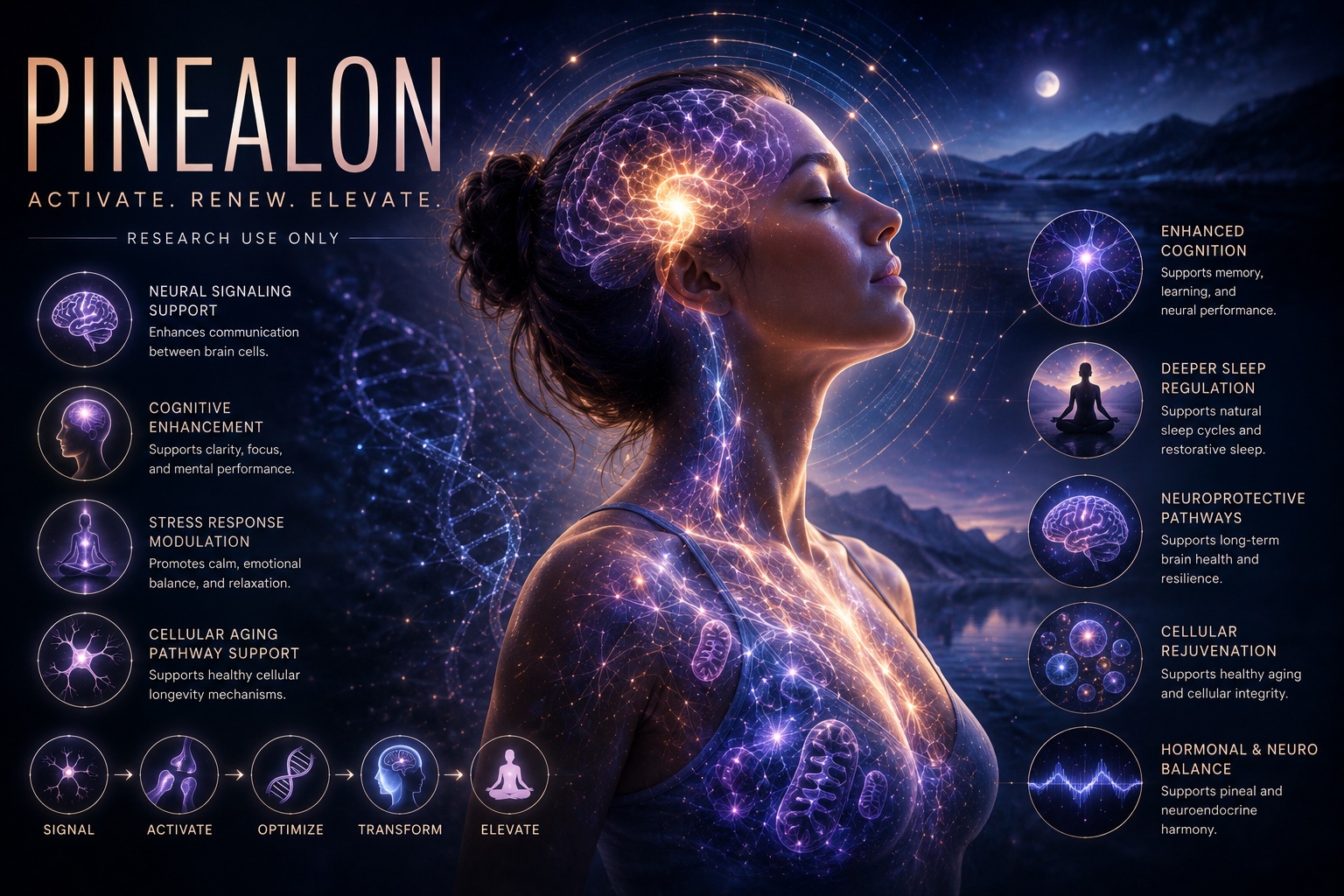
As interest in longevity and cognitive optimization continues to grow, researchers are increasingly exploring peptides that may support healthy aging and brain function. One peptide that has attracted attention in scientific circles is Pinealon.

Pinealon is a short synthetic peptide derived from research into naturally occurring regulatory peptides. It has been studied for its potential role in supporting neuronal health, protecting cells from age-related decline, and promoting optimal cellular communication. While research is ongoing, Pinealon has become a topic of interest among those exploring advanced approaches to healthy aging and cognitive wellness.

This article examines what Pinealon is, how it works, and what current research suggests about its potential benefits.

What Is Pinealon?

Pinealon is a synthetic tripeptide composed of three amino acids:

Glutamic acid
Aspartic acid
Arginine

It was developed as part of a broader scientific effort to investigate peptide bioregulators—small protein fragments that may help regulate cellular processes and gene expression.

Pinealon has primarily been studied for its potential effects on the nervous system, particularly in relation to cognitive function, neuronal protection, and age-related cellular changes.

Unlike many compounds that focus on stimulating a single pathway, Pinealon is believed to influence multiple cellular mechanisms involved in maintaining healthy brain function.

How Does Pinealon Work?

Researchers believe Pinealon functions as a peptide bioregulator, meaning it may help influence cellular activity at the genetic and molecular level.

Several proposed mechanisms include:

Support for Gene Expression

Research suggests that short peptides may interact with DNA and chromatin structures within cells. This interaction may help regulate the expression of genes involved in cellular maintenance, repair, and adaptation.

By influencing these processes, Pinealon may support the body’s natural ability to maintain healthy cellular function over time.

Cellular Communication

Healthy tissues rely on efficient communication between cells. Pinealon may help optimize signaling pathways that allow cells to respond appropriately to stress and environmental changes.

Neuronal Protection

Aging and oxidative stress can negatively impact brain cells. Preliminary research suggests Pinealon may help support neuronal resilience and maintain normal cellular function under challenging conditions.

Healthy Cellular Aging

Some studies indicate that peptide bioregulators may influence biological processes associated with aging, potentially helping cells maintain function as they grow older.

Potential Benefits of Pinealon

While human research remains limited, available studies have explored several potential areas of interest.

1. Cognitive Health Support

One of the primary reasons researchers have investigated Pinealon is its potential role in supporting cognitive function.

Healthy cognition depends on:

Efficient neuronal signaling
Healthy blood flow
Cellular energy production
Protection against oxidative stress

Research suggests Pinealon may support some of these foundational processes, making it a peptide of interest in cognitive wellness and healthy aging research.

2. Neuroprotective Properties

Neurons are particularly vulnerable to oxidative damage because of their high energy demands.

Preclinical research has examined whether Pinealon may help:

Support neuronal survival
Reduce cellular stress
Maintain normal neuronal function
Promote cellular resilience

These findings have led researchers to investigate its potential role in supporting long-term brain health.

3. Healthy Aging Support

One of the most intriguing aspects of Pinealon research is its potential influence on age-related biological processes.

Scientists studying peptide bioregulators have proposed that these compounds may help:

Support cellular renewal
Maintain healthy tissue function
Promote adaptive responses to stress
Encourage balanced gene activity

Although more research is needed, these mechanisms align with broader longevity and healthy-aging objectives.

4. Support for Cellular Repair Mechanisms

Cells constantly experience damage from environmental stressors, metabolic processes, and aging.

Research suggests Pinealon may help support cellular systems involved in:

DNA maintenance
Protein synthesis
Cellular recovery
Stress adaptation

Healthy cellular repair processes are critical for maintaining optimal function throughout life.

5. Antioxidant and Oxidative Stress Support

Oxidative stress occurs when free radicals overwhelm the body’s natural defenses.

Excessive oxidative stress has been associated with:

Cognitive decline
Cellular dysfunction
Accelerated aging
Reduced tissue performance

Preliminary research indicates Pinealon may help support the body’s natural antioxidant defenses and promote cellular resilience against oxidative challenges.

Pinealon and Longevity Research

The field of longevity science focuses on extending healthspan—the number of years a person remains healthy and functional.

Peptide bioregulators such as Pinealon have generated interest because they may support several biological systems associated with healthy aging, including:

Cellular communication
DNA stability
Protein synthesis
Stress adaptation
Nervous system function

Researchers continue to investigate whether targeted peptide interventions may contribute to maintaining physiological function as individuals age.

While Pinealon is not considered an anti-aging cure, its potential cellular effects make it an interesting area of ongoing study.

What Does the Research Say?

Most Pinealon research has originated from investigations into peptide bioregulators and aging.

Published studies have explored:

Cellular aging processes
Neuronal function
Genetic regulation
Tissue maintenance
Adaptive cellular responses

Researchers have reported promising findings in laboratory and preclinical settings, particularly regarding cellular protection and gene regulation.

However, larger human studies are needed to fully understand Pinealon’s long-term effects, safety profile, and potential applications.

As with many emerging peptides, current evidence should be viewed as preliminary rather than definitive.

Safety and Considerations

Research involving Pinealon has generally reported favorable tolerability in scientific settings.

However, several important considerations remain:

Human research is still limited.
Long-term outcomes are not fully established.
Individual responses may vary.
More clinical investigation is needed.

Anyone interested in peptide-based wellness strategies should consult a qualified healthcare professional before making health-related decisions.

Frequently Asked Questions
What is Pinealon used for?

Pinealon is primarily studied for its potential role in supporting cognitive health, neuronal function, cellular resilience, and healthy aging processes.

Is Pinealon a hormone?

No. Pinealon is a synthetic peptide bioregulator composed of three amino acids and is not classified as a hormone.

Can Pinealon improve memory?

Research has explored its potential effects on cognitive function and neuronal health, but more human studies are needed before conclusions can be made regarding memory enhancement.

Is Pinealon considered an anti-aging peptide?

Pinealon is often discussed within longevity research because of its potential influence on cellular function and age-related biological processes. However, it is not approved as an anti-aging treatment.

Is research on Pinealon still ongoing?

Yes. Researchers continue to investigate Pinealon and other peptide bioregulators to better understand their mechanisms and potential applications in healthy aging and cognitive support.

Final Thoughts

Pinealon is a fascinating peptide bioregulator that has attracted attention for its potential role in cognitive health, cellular resilience, and longevity research. By supporting mechanisms related to neuronal function, gene regulation, and healthy cellular aging, Pinealon represents an emerging area of scientific interest.

While current findings are promising, additional human research is necessary to fully understand its benefits, safety profile, and long-term applications. As the fields of peptide science and longevity medicine continue to evolve, Pinealon remains a peptide worth watching.

Disclaimer

This article is for educational and informational purposes only. Pinealon is an area of ongoing scientific research, and current findings continue to evolve. This content is not intended to diagnose, treat, cure, or prevent any disease and should not be considered medical advice. Always consult a qualified healthcare professional regarding health-related decisions

Back to all posts
Anti-Aging / Longevity,

Pinealon Peptide: What It Is, How It Works, and Potential Benefits

June 23, 2026

Pinealon Peptide: A Promising Peptide for Brain Health and Healthy Aging

As interest in longevity and cognitive optimization continues to grow, researchers are increasingly exploring peptides that may support healthy aging and brain function. One peptide that has attracted attention in scientific circles is Pinealon.

Pinealon is a short synthetic peptide derived from research into naturally occurring regulatory peptides. It has been studied for its potential role in supporting neuronal health, protecting cells from age-related decline, and promoting optimal cellular communication. While research is ongoing, Pinealon has become a topic of interest among those exploring advanced approaches to healthy aging and cognitive wellness.

This article examines what Pinealon is, how it works, and what current research suggests about its potential benefits.

What Is Pinealon?

Pinealon is a synthetic tripeptide composed of three amino acids:

Glutamic acid
Aspartic acid
Arginine

It was developed as part of a broader scientific effort to investigate peptide bioregulators—small protein fragments that may help regulate cellular processes and gene expression.

Pinealon has primarily been studied for its potential effects on the nervous system, particularly in relation to cognitive function, neuronal protection, and age-related cellular changes.

Unlike many compounds that focus on stimulating a single pathway, Pinealon is believed to influence multiple cellular mechanisms involved in maintaining healthy brain function.

How Does Pinealon Work?

Researchers believe Pinealon functions as a peptide bioregulator, meaning it may help influence cellular activity at the genetic and molecular level.

Several proposed mechanisms include:

Support for Gene Expression

Research suggests that short peptides may interact with DNA and chromatin structures within cells. This interaction may help regulate the expression of genes involved in cellular maintenance, repair, and adaptation.

By influencing these processes, Pinealon may support the body’s natural ability to maintain healthy cellular function over time.

Cellular Communication

Healthy tissues rely on efficient communication between cells. Pinealon may help optimize signaling pathways that allow cells to respond appropriately to stress and environmental changes.

Neuronal Protection

Aging and oxidative stress can negatively impact brain cells. Preliminary research suggests Pinealon may help support neuronal resilience and maintain normal cellular function under challenging conditions.

Healthy Cellular Aging

Some studies indicate that peptide bioregulators may influence biological processes associated with aging, potentially helping cells maintain function as they grow older.

Potential Benefits of Pinealon

While human research remains limited, available studies have explored several potential areas of interest.

1. Cognitive Health Support

One of the primary reasons researchers have investigated Pinealon is its potential role in supporting cognitive function.

Healthy cognition depends on:

Efficient neuronal signaling
Healthy blood flow
Cellular energy production
Protection against oxidative stress

Research suggests Pinealon may support some of these foundational processes, making it a peptide of interest in cognitive wellness and healthy aging research.

2. Neuroprotective Properties

Neurons are particularly vulnerable to oxidative damage because of their high energy demands.

Preclinical research has examined whether Pinealon may help:

Support neuronal survival
Reduce cellular stress
Maintain normal neuronal function
Promote cellular resilience

These findings have led researchers to investigate its potential role in supporting long-term brain health.

3. Healthy Aging Support

One of the most intriguing aspects of Pinealon research is its potential influence on age-related biological processes.

Scientists studying peptide bioregulators have proposed that these compounds may help:

Support cellular renewal
Maintain healthy tissue function
Promote adaptive responses to stress
Encourage balanced gene activity

Although more research is needed, these mechanisms align with broader longevity and healthy-aging objectives.

4. Support for Cellular Repair Mechanisms

Cells constantly experience damage from environmental stressors, metabolic processes, and aging.

Research suggests Pinealon may help support cellular systems involved in:

DNA maintenance
Protein synthesis
Cellular recovery
Stress adaptation

Healthy cellular repair processes are critical for maintaining optimal function throughout life.

5. Antioxidant and Oxidative Stress Support

Oxidative stress occurs when free radicals overwhelm the body’s natural defenses.

Excessive oxidative stress has been associated with:

Cognitive decline
Cellular dysfunction
Accelerated aging
Reduced tissue performance

Preliminary research indicates Pinealon may help support the body’s natural antioxidant defenses and promote cellular resilience against oxidative challenges.

Pinealon and Longevity Research

The field of longevity science focuses on extending healthspan—the number of years a person remains healthy and functional.

Peptide bioregulators such as Pinealon have generated interest because they may support several biological systems associated with healthy aging, including:

Cellular communication
DNA stability
Protein synthesis
Stress adaptation
Nervous system function

Researchers continue to investigate whether targeted peptide interventions may contribute to maintaining physiological function as individuals age.

While Pinealon is not considered an anti-aging cure, its potential cellular effects make it an interesting area of ongoing study.

What Does the Research Say?

Most Pinealon research has originated from investigations into peptide bioregulators and aging.

Published studies have explored:

Cellular aging processes
Neuronal function
Genetic regulation
Tissue maintenance
Adaptive cellular responses

Researchers have reported promising findings in laboratory and preclinical settings, particularly regarding cellular protection and gene regulation.

However, larger human studies are needed to fully understand Pinealon’s long-term effects, safety profile, and potential applications.

As with many emerging peptides, current evidence should be viewed as preliminary rather than definitive.

Safety and Considerations

Research involving Pinealon has generally reported favorable tolerability in scientific settings.

However, several important considerations remain:

Human research is still limited.
Long-term outcomes are not fully established.
Individual responses may vary.
More clinical investigation is needed.

Anyone interested in peptide-based wellness strategies should consult a qualified healthcare professional before making health-related decisions.

Frequently Asked Questions
What is Pinealon used for?

Pinealon is primarily studied for its potential role in supporting cognitive health, neuronal function, cellular resilience, and healthy aging processes.

Is Pinealon a hormone?

No. Pinealon is a synthetic peptide bioregulator composed of three amino acids and is not classified as a hormone.

Can Pinealon improve memory?

Research has explored its potential effects on cognitive function and neuronal health, but more human studies are needed before conclusions can be made regarding memory enhancement.

Is Pinealon considered an anti-aging peptide?

Pinealon is often discussed within longevity research because of its potential influence on cellular function and age-related biological processes. However, it is not approved as an anti-aging treatment.

Is research on Pinealon still ongoing?

Yes. Researchers continue to investigate Pinealon and other peptide bioregulators to better understand their mechanisms and potential applications in healthy aging and cognitive support.

Final Thoughts

Pinealon is a fascinating peptide bioregulator that has attracted attention for its potential role in cognitive health, cellular resilience, and longevity research. By supporting mechanisms related to neuronal function, gene regulation, and healthy cellular aging, Pinealon represents an emerging area of scientific interest.

While current findings are promising, additional human research is necessary to fully understand its benefits, safety profile, and long-term applications. As the fields of peptide science and longevity medicine continue to evolve, Pinealon remains a peptide worth watching.

Disclaimer

This article is for educational and informational purposes only. Pinealon is an area of ongoing scientific research, and current findings continue to evolve. This content is not intended to diagnose, treat, cure, or prevent any disease and should not be considered medical advice. Always consult a qualified healthcare professional regarding health-related decisions