Gonadorelin: What It Is, How It Works, and Its Potential Benefits
Gonadorelin: Understanding the Peptide That Helps Regulate Reproductive Hormones
The endocrine system relies on a complex network of hormones to regulate growth, metabolism, reproduction, and overall health. One of the key hormones involved in reproductive function is Gonadotropin-Releasing Hormone (GnRH). Scientists developed Gonadorelin, a synthetic version of this naturally occurring hormone, to better understand and support hormonal signaling within the body.
Because of its ability to stimulate the body’s natural hormone cascade, Gonadorelin has become an important subject of research in reproductive medicine, hormone health, and endocrinology.
This article explores what Gonadorelin is, how it works, and what current scientific research suggests about its potential applications.
What Is Gonadorelin?
Gonadorelin is a synthetic form of Gonadotropin-Releasing Hormone (GnRH), a peptide naturally produced by the hypothalamus.
GnRH plays a critical role in regulating the reproductive hormone axis by signaling the pituitary gland to release two important hormones:
- Luteinizing Hormone (LH)
- Follicle-Stimulating Hormone (FSH)
These hormones help regulate reproductive function in both men and women.
Because Gonadorelin closely mimics natural GnRH, it is widely used in hormone research and certain medical applications.
How Does Gonadorelin Work?
Stimulating the Pituitary Gland
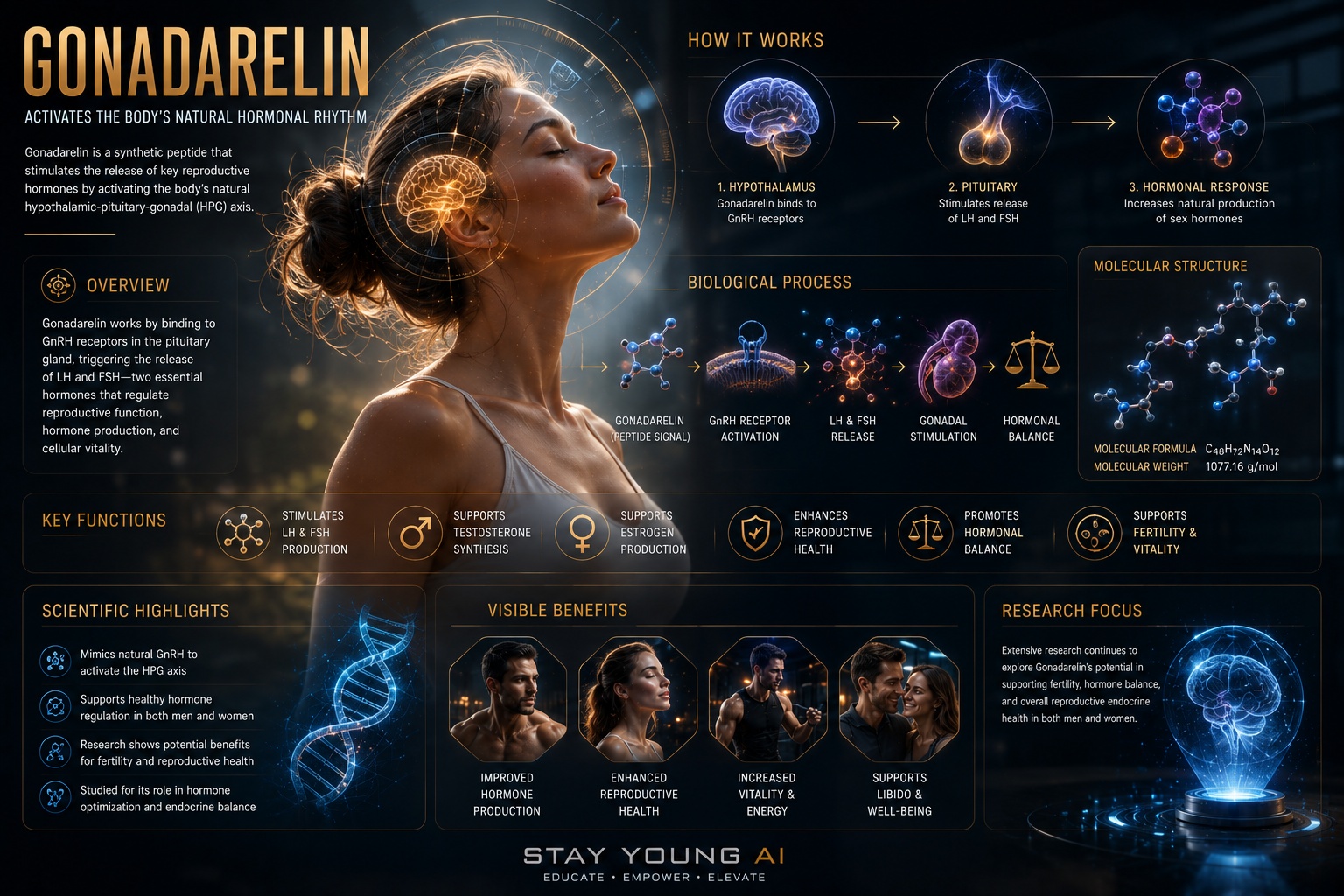
After being released or administered, Gonadorelin binds to GnRH receptors in the pituitary gland.
This interaction stimulates the release of:
- Luteinizing Hormone (LH)
- Follicle-Stimulating Hormone (FSH)
These hormones then act on the reproductive organs to support normal hormone production.
Supporting Natural Testosterone Production
In men, LH stimulates the Leydig cells in the testes to produce testosterone.
Researchers continue to investigate Gonadorelin’s role in supporting the body’s natural hormone production through this physiological pathway.
Supporting Reproductive Function
FSH plays an important role in reproductive health.
Researchers study Gonadorelin because of its influence on processes involved in:
- Sperm production
- Ovarian follicle development
- Reproductive hormone regulation
- Fertility research
Potential Benefits of Gonadorelin
1. Hormone Regulation
One of Gonadorelin’s primary functions is supporting the body’s natural hormone signaling.
Researchers continue to study its role in maintaining healthy endocrine function.
2. Reproductive Health
Gonadorelin has been investigated for its potential role in supporting normal reproductive hormone balance in both men and women.
Areas of research include:
- Fertility
- Ovulation
- Testicular function
- Reproductive endocrinology
3. Testosterone Production Research
Rather than supplying testosterone directly, Gonadorelin stimulates the body’s own hormonal pathway.
Researchers continue to explore this physiological approach to supporting endogenous testosterone production.
4. Fertility Research
Healthy LH and FSH production are essential for normal reproductive function.
Scientific studies continue to investigate Gonadorelin’s role in fertility-related research and reproductive hormone regulation.
5. Endocrine Health
The hypothalamic-pituitary-gonadal (HPG) axis plays a central role in hormone balance.
Researchers study Gonadorelin because it directly influences one of the earliest steps in this hormonal signaling pathway.
Gonadorelin vs. hCG
Although Gonadorelin and human chorionic gonadotropin (hCG) are both associated with hormone regulation, they work differently.
Gonadorelin
- Mimics natural GnRH
- Stimulates the pituitary gland
- Increases natural LH and FSH release
- Supports the body’s own hormonal signaling
hCG
- Mimics the action of LH
- Acts directly on the testes
- Stimulates testosterone production without activating the pituitary gland
Researchers continue to study the advantages and limitations of each approach depending on the clinical situation.
Current Research
Scientific investigations involving Gonadorelin continue to explore its role in:
- Hormone regulation
- Fertility
- Testosterone production
- Endocrine disorders
- Reproductive medicine
- Pituitary function
Because Gonadorelin closely resembles the body’s natural GnRH, it remains an important tool in both clinical endocrinology and scientific research.
Safety and Considerations
Important considerations include:
- Gonadorelin should only be used under appropriate medical supervision where clinically indicated.
- Individual hormone responses may vary.
- Long-term outcomes depend on the underlying medical condition and treatment goals.
- Hormone levels should be monitored by qualified healthcare professionals when used therapeutically.
Frequently Asked Questions
What is Gonadorelin?
Gonadorelin is a synthetic form of Gonadotropin-Releasing Hormone (GnRH) that stimulates the pituitary gland to release LH and FSH.
What is Gonadorelin used for?
Researchers and healthcare professionals study Gonadorelin for its role in hormone regulation, fertility, reproductive health, and endocrine function.
Does Gonadorelin increase testosterone?
Gonadorelin stimulates the release of LH, which signals the testes to produce testosterone naturally. Research continues to explore its applications in hormone health.
How is Gonadorelin different from hCG?
Gonadorelin works by stimulating the pituitary gland to release LH and FSH, while hCG acts directly on the testes by mimicking LH.
Is Gonadorelin approved for medical use?
Gonadorelin has recognized medical uses in certain diagnostic and therapeutic settings in some countries, although availability and regulatory status vary by region.
Final Thoughts
Gonadorelin is an important peptide in hormone and reproductive health research because it closely mimics the body’s natural GnRH signaling. By stimulating the release of LH and FSH, it supports normal endocrine function and has become a valuable tool in fertility research, testosterone regulation, and reproductive medicine.
As scientific understanding continues to evolve, Gonadorelin remains an important focus in endocrinology and hormone health. Ongoing research will continue to clarify its long-term applications and therapeutic potential.
Disclaimer
This article is provided for educational and informational purposes only. Gonadorelin should only be used under the guidance of qualified healthcare professionals where medically appropriate. This content is not intended to diagnose, treat, cure, or prevent any disease and should not be considered medical advice. Always consult a qualified healthcare professional regarding health-related decisions..