Gonadorelin vs HCG: Hormone Regulation, Fertility, and Performance
When it comes to restoring reproductive hormone balance, preserving fertility, or supporting recovery after anabolic steroid use, Gonadorelin and human chorionic gonadotropin (HCG) are two of the most commonly discussed hormone therapies. Although both influence testosterone production and reproductive function, they work at completely different points within the hypothalamic-pituitary-gonadal (HPG) axis, resulting in distinct clinical applications, benefits, and limitations.
Gonadorelin is a synthetic version of gonadotropin-releasing hormone (GnRH) that stimulates the pituitary gland to release luteinizing hormone (LH) and follicle-stimulating hormone (FSH). HCG, by contrast, mimics LH directly, bypassing the brain and pituitary to stimulate testosterone production in the testes or ovulation in the ovaries. Because of these differences, the choice between Gonadorelin and HCG depends on whether the goal is restoring natural hormone signaling, improving fertility, diagnosing hormonal disorders, or maintaining testicular function during hormone therapy.
In this guide, we’ll compare:
- What Gonadorelin is
- What HCG is
- How each works
- Hormone regulation
- Fertility applications
- Performance and post-cycle considerations
- Side effects
- Safety
- Legal status
What Is Gonadorelin?
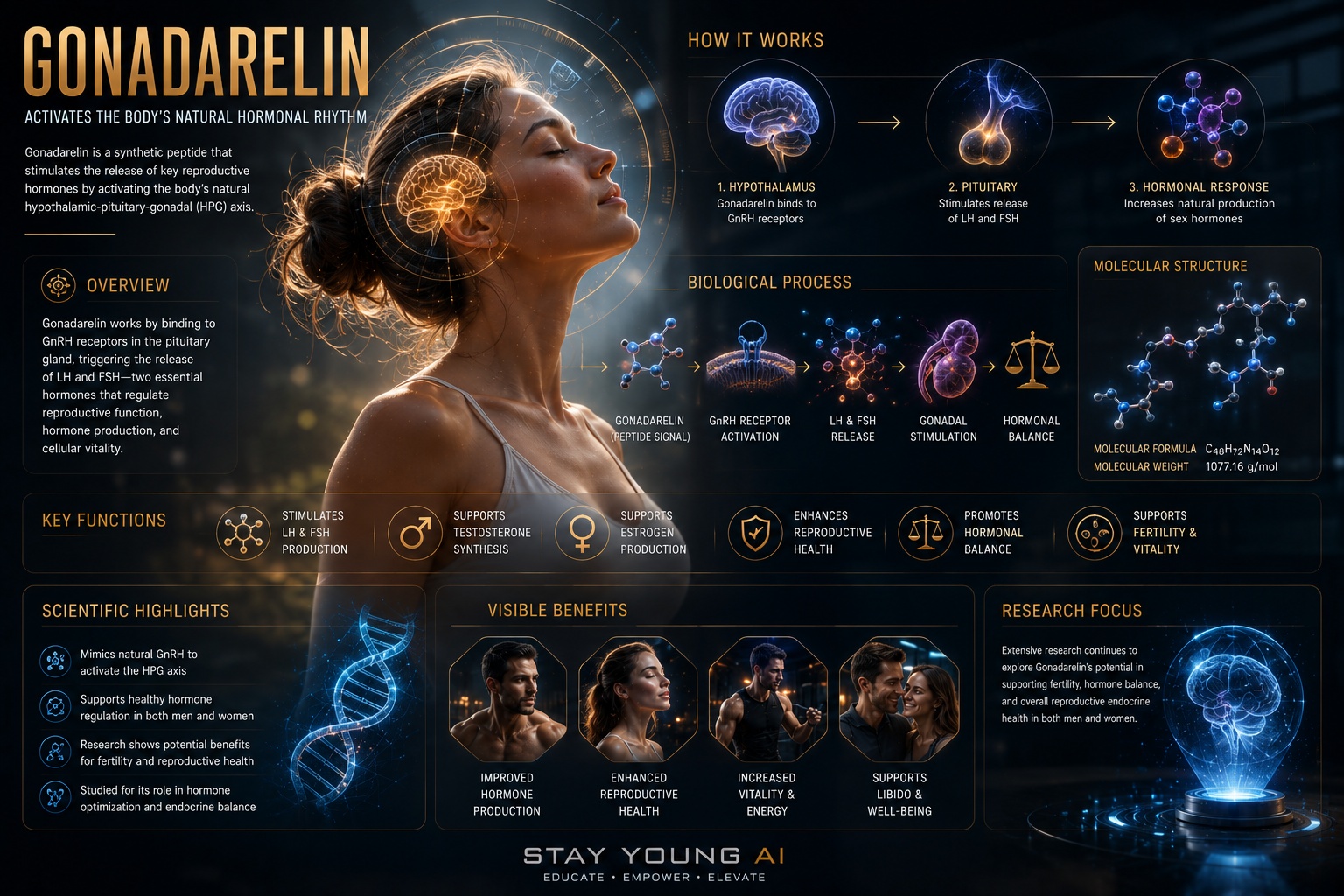
Gonadorelin is a synthetic form of gonadotropin-releasing hormone (GnRH), the hormone naturally released by the hypothalamus to initiate reproductive hormone production.
When Gonadorelin binds to GnRH receptors in the pituitary gland, it stimulates the release of:
- Luteinizing hormone (LH)
- Follicle-stimulating hormone (FSH)
These hormones then signal the testes or ovaries to produce sex hormones and support fertility.
Clinical uses include:
- Evaluation of pituitary function
- Diagnosis of hypogonadism
- Treatment of selected infertility cases
- Investigation of reproductive disorders
Unlike HCG, Gonadorelin works upstream, encouraging the body to activate its own hormone-production pathway.
What Is HCG?
Human chorionic gonadotropin (HCG) is a hormone naturally produced by the placenta during pregnancy.
Because its molecular structure closely resembles LH, HCG binds directly to LH receptors.
In men, HCG:
- Stimulates Leydig cells
- Increases testosterone production
- Helps maintain testicular size
- Supports sperm production
In women, HCG:
- Triggers ovulation
- Supports progesterone production
- Plays a central role in fertility treatments
Unlike Gonadorelin, HCG bypasses the hypothalamus and pituitary entirely, acting directly on the reproductive organs.
Mechanism of Action
The primary distinction between these therapies lies in where they act within the HPG axis.
Site of action within the HPG axis
Comparison of where Gonadorelin and HCG primarily act.00.551.11.652.2GonadorelinHCG
Interpretation: In this comparison, 1 = Hypothalamus/Pituitary (upstream) and 2 = Gonads (downstream).
Gonadorelin
Gonadorelin works by:
- Activating GnRH receptors
- Stimulating LH release
- Stimulating FSH release
- Encouraging natural testosterone production
- Supporting physiological hormone signaling
Because it restores signaling from the top of the HPG axis, Gonadorelin promotes endogenous hormone regulation.
HCG
HCG works by:
- Mimicking LH
- Directly stimulating Leydig cells
- Increasing testosterone production without pituitary involvement
This makes HCG effective even when natural LH production is suppressed.
Benefits of Gonadorelin
Restores Natural Hormone Signaling
Because Gonadorelin activates the pituitary gland, it encourages the body to resume its own production of LH and FSH.
Potential benefits include:
- Improved hormonal balance
- Physiological testosterone production
- Support for reproductive function
Fertility Support
In selected patients, Gonadorelin may assist with:
- Ovulation induction
- Spermatogenesis
- Hypothalamic infertility
Its effects depend on an intact pituitary gland capable of responding to GnRH stimulation.
Diagnostic Testing
Endocrinologists commonly use Gonadorelin to evaluate:
- Pituitary responsiveness
- Secondary hypogonadism
- Hypothalamic dysfunction
These diagnostic applications remain among its primary medical uses.
Hormone Recovery
Because Gonadorelin stimulates natural hormone production rather than replacing it, researchers continue exploring its potential role in restoring HPG axis function after suppression.
Benefits of HCG
Testosterone Production
HCG rapidly increases testosterone production by stimulating Leydig cells directly.
Benefits include:
- Increased endogenous testosterone
- Maintenance of testicular activity
- Prevention of testicular atrophy
Fertility Treatment
HCG plays an important role in assisted reproductive medicine.
In women it:
- Triggers ovulation
- Supports fertility protocols
In men it:
- Maintains sperm production
- Preserves testicular function
Testicular Preservation
One of HCG’s most recognized applications in men receiving testosterone therapy is maintaining:
- Testicular volume
- Intratesticular testosterone
- Fertility potential
Gonadorelin vs HCG for Fertility
Both compounds support fertility, but they accomplish this differently.
Gonadorelin may be preferred when:
- Natural hormone signaling is impaired
- Pituitary stimulation is desired
- Physiological LH and FSH production is needed
HCG may be preferred when:
- Immediate LH-like stimulation is required
- Ovulation must be triggered
- Testicular testosterone production must be rapidly increased
Treatment selection depends on the underlying cause of infertility and should be determined by a qualified healthcare professional.
Gonadorelin vs HCG for Performance and Hormone Recovery
Within bodybuilding and performance communities, both compounds have been discussed for hormone recovery.
Gonadorelin
Potential advantages include:
- Encourages natural HPG axis recovery
- Promotes endogenous LH and FSH production
- May support more physiological hormone restoration
HCG
Potential advantages include:
- Rapid testosterone production
- Preservation of testicular function
- Prevention of testicular atrophy during hormone suppression
However, prolonged use without appropriate medical supervision may reduce the body’s reliance on natural LH signaling.
Side Effects Comparison
Gonadorelin
Possible side effects include:
- Headache
- Dizziness
- Nausea
- Hot flashes
- Injection site irritation
Continuous administration may eventually suppress pituitary responsiveness, which is why dosing protocols are carefully designed in clinical practice.
HCG
Possible side effects include:
- Water retention
- Gynecomastia
- Elevated estrogen levels
- Mood changes
- Injection site reactions
In women receiving fertility treatment, HCG may also increase the risk of ovarian hyperstimulation syndrome (OHSS).
Safety Considerations
Gonadorelin
Current clinical experience suggests Gonadorelin is generally well tolerated when used appropriately.
Important considerations include:
- Proper dosing schedule
- Monitoring pituitary response
- Avoiding continuous overstimulation
HCG
HCG has an extensive medical history but requires monitoring because of its powerful effects on hormone production.
Potential concerns include:
- Estrogen elevation
- Hormonal imbalance
- Testicular receptor desensitization with prolonged inappropriate use
These risks emphasize the importance of individualized treatment under medical supervision.
Legal Status
Both Gonadorelin and HCG are prescription-only medications in many countries.
Gonadorelin
Approved uses include:
- Diagnostic endocrine testing
- Selected fertility treatments
It is not approved for bodybuilding or performance enhancement.
HCG
Approved medical uses include:
- Fertility treatment
- Certain forms of hypogonadism
- Reproductive hormone therapy
Its use for bodybuilding or unsupervised hormone recovery is considered off-label and should only occur under qualified medical supervision.
Which One Is Better?
The answer depends entirely on the treatment goal.
Gonadorelin may be better if your goal is:
- Restoring natural hormone signaling
- Evaluating pituitary function
- Supporting physiological reproductive hormone regulation
- Selected fertility conditions
HCG may be better if your goal is:
- Rapid testosterone stimulation
- Ovulation induction
- Maintaining testicular function
- Preserving fertility during hormone therapy
Each therapy addresses a different point within the HPG axis and is appropriate for different clinical situations.
Conclusion
Although Gonadorelin and HCG both influence reproductive hormone function, they are not interchangeable. Gonadorelin works at the beginning of the HPG axis by stimulating the pituitary gland to release LH and FSH, helping restore the body’s own hormonal signaling. HCG works farther downstream by directly activating LH receptors in the gonads, producing faster testosterone and ovulation responses without relying on pituitary function.
Both medications remain valuable tools in endocrinology and reproductive medicine. Gonadorelin is often favored when restoring physiological hormone regulation or evaluating pituitary function, while HCG remains a cornerstone of fertility treatment and preservation of gonadal function. Choosing between them depends on the underlying medical condition, treatment objectives, and careful guidance from a qualified healthcare professional.