Peptide therapies have become increasingly popular within:
Women’s wellness
Biohacking
Longevity optimization
Aesthetic enhancement
Sexual-health discussions
Among the most talked-about peptides are:
→ Melanotan II
→ PT-141 (Bremelanotide)
These compounds are commonly discussed for two very different reasons:
→ Tanning enhancement
→ Female libido support
Melanotan II originally gained attention because of its potential ability to:
→ Stimulate melanin production and darken skin pigmentation
while PT-141 was later developed specifically to target:
→ Female sexual desire and arousal pathways
However, despite growing online popularity, both peptides come with important:
→ Safety concerns
→ Hormonal considerations
→ Cardiovascular risks
→ Regulatory issues
This educational guide explores:
What Melanotan II and PT-141 are
How they work
Why women use them
Potential benefits and risks
Hormonal and skin-health concerns
FDA and legal status
Important safety considerations
What Are Melanotan II & PT-141?
Both Melanotan II and PT-141 belong to a class of compounds known as:
→ Melanocortin receptor peptides
These peptides interact with receptors involved in:
→ Skin pigmentation
→ Sexual signaling
→ Appetite regulation
→ Energy balance
Melanotan II
Melanotan II was originally developed to stimulate:
→ Melanin production
which may lead to:
→ Darker skin pigmentation without UV exposure
Why It Became Popular
Users commonly discuss Melanotan II for:
→ Sunless tanning
→ Aesthetic enhancement
→ Libido-related side effects
PT-141 (Bremelanotide)
PT-141 was later derived from Melanotan II and engineered specifically to target:
→ Sexual arousal pathways
rather than:
→ Skin pigmentation
FDA Status Of PT-141
Unlike Melanotan II, PT-141 is FDA-approved under the brand name:
→ Vyleesi
for:
→ Hypoactive Sexual Desire Disorder (HSDD) in premenopausal women
How Melanotan II & PT-141 Work
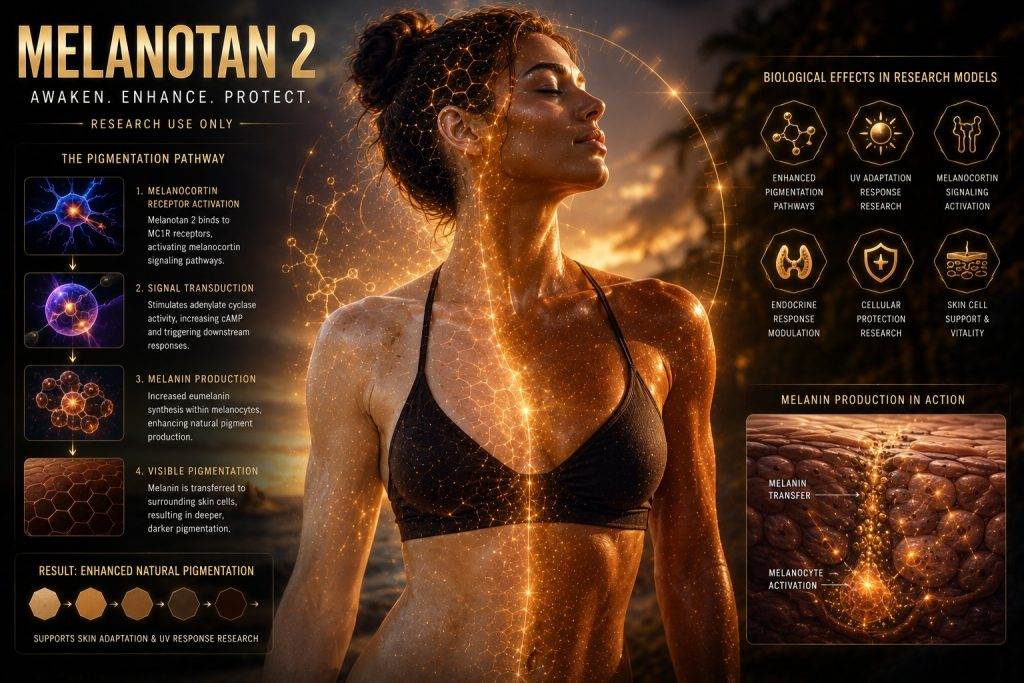
Melanotan II Mechanism
Melanotan II primarily stimulates:
→ Melanocortin-1 receptors (MC1R)
which increases:
→ Melanin production in skin cells
Additional Receptor Activity
Melanotan II also affects:
→ MC3R and MC4R receptors
which may influence:
→ Libido
→ Appetite
→ Energy balance
PT-141 Mechanism
PT-141 was designed to more selectively stimulate:
→ Melanocortin-4 receptors (MC4R)
located within:
→ Brain arousal pathways
Why PT-141 Is Different
Unlike Viagra-type medications that focus on:
→ Blood flow
PT-141 primarily works through:
→ Neurological sexual-desire signaling
Does PT-141 Cause Tanning?
No.
PT-141 generally does NOT significantly stimulate:
→ Skin pigmentation
because it avoids strong MC1R activation.
Why Women Use These Peptides
Melanotan II For Tanning
Many women are drawn to Melanotan II because it promises:
→ Darker skin without prolonged UV exposure
Potential reasons commonly discussed include:
→ Cosmetic appearance
→ Reduced tanning-bed exposure
→ Fitness and modeling aesthetics
Libido Effects
Because Melanotan II also stimulates sexual-signaling pathways, some users report:
→ Increased sexual desire and arousal
PT-141 For Female Libido
PT-141 is specifically approved for women diagnosed with:
→ Hypoactive Sexual Desire Disorder (HSDD)
Potential goals commonly discussed include:
→ Improved sexual desire
→ Enhanced arousal
→ Better sexual satisfaction
Why Some Women Prefer PT-141
Potential reasons may include:
→ Non-hormonal mechanism
→ Medical oversight
→ FDA approval
→ No direct testosterone or estrogen manipulation
Potential Benefits Of Melanotan II & PT-141
Potential Benefits Of Melanotan II
Potential effects commonly discussed include:
→ Darker skin pigmentation
→ Reduced sunburn susceptibility
→ Increased libido
Potential Benefits Of PT-141
Potential benefits commonly discussed include:
→ Increased sexual desire
→ Improved arousal response
→ Non-hormonal libido support
Important Distinction
PT-141 is:
→ Clinically tested and FDA-approved
while Melanotan II remains:
→ Unapproved and unregulated
Risks & Side Effects Women Should Understand
Common Side Effects Of Melanotan II
Potential issues may include:
→ Nausea
→ Facial flushing
→ Appetite suppression
→ Fatigue
→ Mood changes
Skin & Pigmentation Concerns
More serious concerns commonly discussed include:
→ Darkening of moles
→ Uneven pigmentation
→ New freckles
→ Potential melanoma-related concerns
Why This Matters
Artificially stimulating melanin pathways may make:
→ Early skin-cancer detection more difficult
especially in individuals with:
→ Family history of melanoma
Common Side Effects Of PT-141
Potential issues may include:
→ Nausea
→ Headaches
→ Facial flushing
→ Increased blood pressure
→ Injection-site irritation
Cardiovascular Concerns
PT-141 may temporarily increase:
→ Blood pressure and vascular stress
which may be problematic for individuals with:
→ Hypertension
→ Migraines
→ Cardiovascular disease
Hormonal & Neurological Considerations
Melanotan II
Because Melanotan II affects multiple melanocortin receptors, potential effects may include:
→ Mood shifts
→ Appetite changes
→ Energy fluctuations
→ Altered sexual signaling
PT-141
Although PT-141 does not directly alter:
→ Estrogen or testosterone
it still influences:
→ Brain arousal pathways and hypothalamic signaling
Why Women May Respond Differently
Potential response differences may depend on:
→ Hormonal baseline
→ Menstrual cycle phase
→ Perimenopausal status
→ Stress levels
Reproductive Health Questions
Long-term research involving:
→ Female reproductive health and peptide exposure
remains limited.
Legal Status & FDA Regulations
Melanotan II
Melanotan II is:
→ NOT FDA-approved
and is commonly sold online as:
→ A “research chemical”
Regulatory Concerns
Health agencies in multiple countries have issued warnings involving:
→ Illegal sales
→ Product contamination
→ Melanoma concerns
→ Unregulated peptide sourcing
PT-141 (Vyleesi)
PT-141 is FDA-approved in the United States for:
→ Premenopausal women diagnosed with HSDD
Prescription Requirement
PT-141 is only legally available through:
→ Prescription-based medical oversight
Important Legal Distinction
Compound FDA Status
Melanotan II Not approved
PT-141 (Vyleesi) FDA-approved for HSDD
Safety Considerations Before Starting
Individuals Who Should Use Caution
Potential higher-risk groups may include individuals with:
→ Cardiovascular disease
→ Hypertension
→ Skin-cancer history
→ Hormonal disorders
→ Autoimmune conditions
Product Quality Risks
Because Melanotan II is commonly sold through:
→ Unregulated research-peptide suppliers
potential concerns may include:
→ Contamination
→ Incorrect dosing
→ Poor sterility
→ Counterfeit products
Best Practices Commonly Discussed
Potential safety-focused strategies may include:
→ Medical consultation
→ Conservative dosing
→ Avoiding excessive use
→ Monitoring blood pressure and skin changes
FAQ: Melanotan II & PT-141 For Women
Is Melanotan II FDA-approved?
No. Melanotan II is not FDA-approved for:
→ Cosmetic or therapeutic use
Does PT-141 increase libido?
Yes. PT-141 is FDA-approved for:
→ Hypoactive Sexual Desire Disorder (HSDD)
in premenopausal women.
Does PT-141 cause tanning?
No. PT-141 generally does not significantly affect:
→ Skin pigmentation
Can Melanotan II increase melanoma risk?
Potential concerns involving:
→ Mole darkening and melanoma detection
have been widely discussed, though long-term human evidence remains limited.
Is PT-141 safer than Melanotan II?
PT-141 has undergone:
→ Clinical testing and FDA review
making it more medically regulated than:
→ Melanotan II
Important Disclaimer
This content is provided for educational purposes only and does not constitute medical advice.
Melanotan II remains:
→ An unapproved investigational peptide
while PT-141 should only be used:
→ Under qualified medical supervision
Always consult a licensed healthcare professional before considering:
→ Peptide-related therapies involving sexual health or cosmetic enhancement
especially if you have:
→ Cardiovascular conditions
→ Hormonal disorders
→ Skin-cancer history
→ Complex medical conditions
Conclusion: What Women Should Know Before Considering Melanotan II or PT-141
Melanotan II and PT-141 continue attracting attention because of their potential effects involving:
→ Tanning
→ Libido enhancement
→ Sexual arousal support
However, despite growing popularity online, these compounds carry very different:
→ Safety profiles
→ Regulatory status
→ Medical legitimacy
Melanotan II remains:
→ Unregulated and unapproved
with concerns involving:
→ Skin pigmentation changes
→ Product contamination
→ Long-term safety uncertainty
PT-141, on the other hand, is:
→ FDA-approved for HSDD in premenopausal women
though it still requires:
→ Medical supervision and cardiovascular caution
Potential benefits commonly discussed may include:
→ Improved sexual desire
→ Cosmetic tanning effects
→ Increased confidence and wellness perception
However, these potential benefits must be balanced against:
→ Cardiovascular risks
→ Skin-health concerns
→ Hormonal considerations
→ Regulatory uncertainty
For most women, prioritizing:
→ Long-term health
→ Medical oversight
→ Evidence-based therapies
remains the safest approach before considering peptide-based enhancement strategies.