As research into peptide therapy and hormone optimization continues to expand, Gonadorelin has emerged as one of the most important regulatory peptides in reproductive endocrinology. Unlike hormones that replace testosterone or estrogen directly, Gonadorelin works by stimulating the body’s own hormonal communication system, helping restore natural production of reproductive hormones through the hypothalamic-pituitary-gonadal (HPG) axis.
Originally developed for diagnostic testing and fertility treatment, Gonadorelin is now being investigated for broader applications ranging from hormone replacement support and infertility treatment to post-cycle hormonal recovery and endocrine disorders. Because it acts upstream in the hormonal cascade, many researchers consider it one of the most physiologically aligned approaches to restoring reproductive hormone function.
In this comprehensive guide, we’ll explore:
- What Gonadorelin is
- How it works
- Medical applications
- Hormonal and fertility benefits
- Athletic and hormone optimization interest
- Safety profile
- Current research
- Future directions
What Is Gonadorelin?
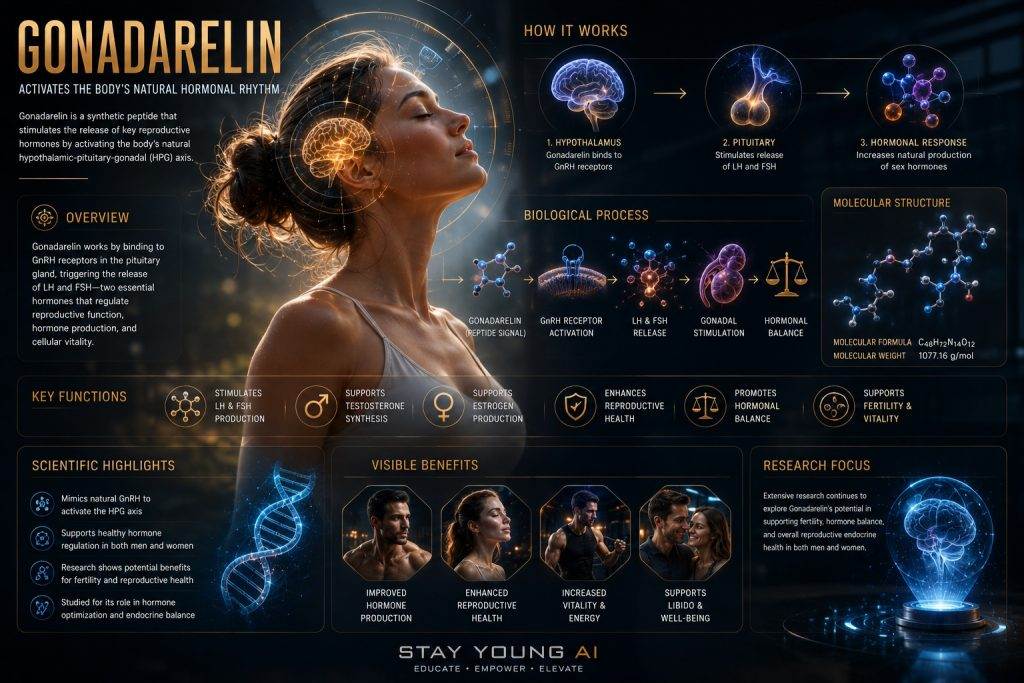
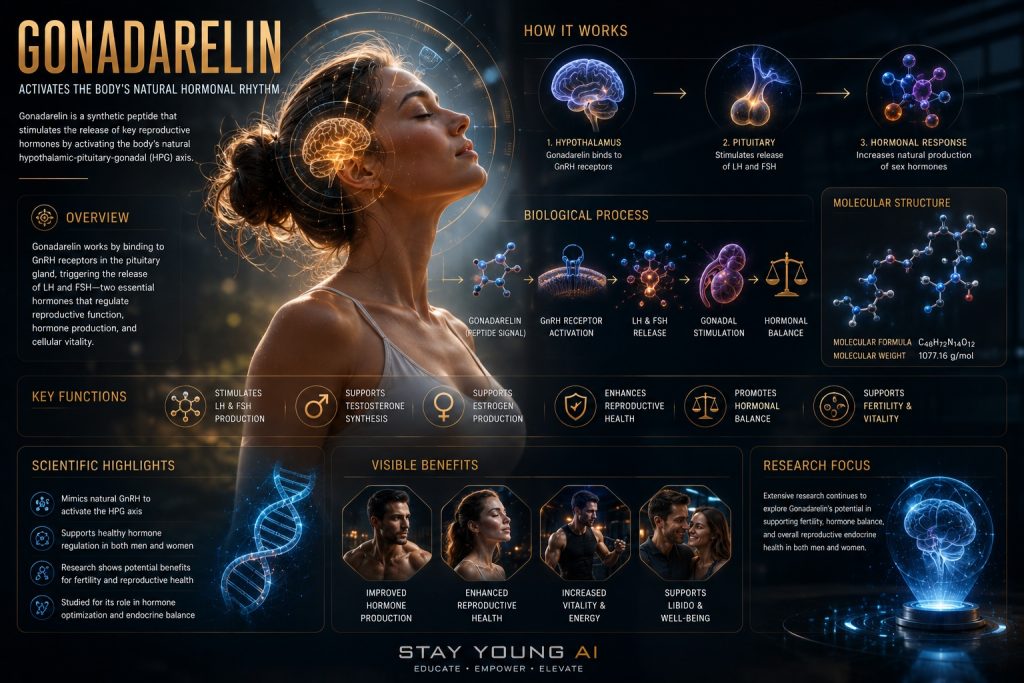
Gonadorelin is a synthetic version of gonadotropin-releasing hormone (GnRH), a naturally occurring decapeptide produced by the hypothalamus.
Its primary function is to stimulate the anterior pituitary gland to release two essential reproductive hormones:
- Luteinizing Hormone (LH)
- Follicle-Stimulating Hormone (FSH)
These hormones regulate:
- Testosterone production in men
- Spermatogenesis
- Ovarian follicle development
- Ovulation
- Estrogen and progesterone production
Because Gonadorelin activates the body’s own endocrine signaling rather than replacing hormones directly, it plays a central role in reproductive medicine and endocrine diagnostics.
How Gonadorelin Works
The body’s reproductive hormone system is regulated through the hypothalamic-pituitary-gonadal (HPG) axis.
The sequence works as follows:
- The hypothalamus releases GnRH.
- GnRH stimulates the pituitary gland.
- The pituitary releases LH and FSH.
- LH and FSH stimulate the testes or ovaries.
- Sex hormones are produced.
Gonadorelin mimics the natural GnRH released by the hypothalamus, allowing this hormonal cascade to resume normal function when endogenous GnRH production is impaired.
Importance of Pulsatile Release
One unique characteristic of GnRH physiology is that it is naturally released in pulses.
Pulsatile stimulation:
- Maintains pituitary responsiveness
- Sustains LH production
- Sustains FSH production
- Preserves fertility
Continuous exposure, however, may suppress pituitary responsiveness through receptor desensitization. This is why medical Gonadorelin therapy is often administered using carefully controlled pulsatile protocols rather than continuous dosing.
Medical Uses of Gonadorelin
Diagnosis of Endocrine Disorders
One of Gonadorelin’s longest-standing clinical applications is endocrine testing.
Physicians use GnRH stimulation testing to evaluate:
- Delayed puberty
- Pituitary dysfunction
- Hypothalamic disorders
- Secondary hypogonadism
These tests help determine whether reproductive hormone deficiencies originate from the hypothalamus or pituitary gland.
Treatment of Hypogonadotropic Hypogonadism
Individuals with impaired GnRH secretion may experience:
- Low testosterone
- Delayed sexual development
- Infertility
- Reduced reproductive function
Gonadorelin therapy can stimulate natural LH and FSH production, helping restore endocrine function in appropriate patients.
Fertility Treatment
Gonadorelin has become an important therapeutic option within reproductive medicine.
In women
It may assist with:
- Ovulation induction
- Follicular development
- Controlled ovarian stimulation
- IVF protocols
In men
It may support:
- Spermatogenesis
- Testicular function
- Testosterone production
- Fertility restoration
Because Gonadorelin stimulates both LH and FSH, it addresses multiple aspects of reproductive physiology simultaneously.
Hormonal Benefits
Although primarily prescribed for medical indications, Gonadorelin may provide several endocrine-related benefits when used appropriately.
Potential effects include:
- Restoration of physiological testosterone production
- Improved reproductive hormone balance
- Maintenance of testicular function
- Support for fertility
- Preservation of normal HPG axis activity
Unlike exogenous testosterone therapy, Gonadorelin attempts to stimulate the body’s own hormonal production rather than replacing testosterone directly.
Gonadorelin and Hormone Optimization
Because Gonadorelin activates natural hormone signaling, it has attracted attention in hormone optimization and sports medicine discussions.
Researchers have explored whether it may help support:
- Recovery of natural testosterone production after suppression
- Maintenance of testicular function during hormone therapy
- Fertility preservation in selected patients
However, evidence for performance enhancement remains limited, and Gonadorelin is not approved for bodybuilding or athletic performance enhancement.
Gonadorelin and Fertility
Perhaps Gonadorelin’s greatest clinical importance lies in fertility treatment.
Female fertility
Benefits may include:
- Restoration of ovulation
- Improved menstrual regulation
- Controlled ovarian stimulation
- Support for assisted reproductive technologies
Male fertility
Potential benefits include:
- Increased LH secretion
- Increased FSH secretion
- Improved sperm production
- Enhanced testicular function
These applications have made Gonadorelin a valuable therapeutic option in reproductive endocrinology.
Safety and Side Effects
Gonadorelin is generally well tolerated when administered under medical supervision.
Reported side effects include:
- Headache
- Injection site irritation
- Flushing
- Mild nausea
- Abdominal discomfort
In women undergoing fertility treatment, ovarian hyperstimulation syndrome (OHSS) remains a rare but potentially serious complication requiring careful monitoring.
Current Research
Ongoing investigations continue exploring Gonadorelin’s therapeutic potential in several areas.
Current research includes:
- Male infertility
- Female infertility
- Hormone replacement support
- Precision reproductive medicine
- Advanced fertility protocols
- Novel drug delivery systems
Researchers are also developing improved delivery methods, including programmable infusion systems and extended-release formulations that more closely replicate physiological hormone release.
Future Directions
Emerging areas of investigation include:
Personalized hormone therapy
Advances in precision medicine may allow Gonadorelin therapy to be tailored according to:
- Individual genetics
- Hormone profiles
- Receptor sensitivity
- Reproductive goals
Combination therapies
Scientists are investigating whether Gonadorelin may work alongside other endocrine therapies to improve treatment outcomes for:
- Complex infertility
- Endocrine disorders
- Hormone-dependent diseases
Neuroendocrine research
Early research is exploring possible interactions between GnRH signaling and:
- Brain aging
- Neuroprotection
- Cognitive health
- Neuroendocrine regulation
These areas remain experimental and require substantially more clinical investigation.
Legal Status
Gonadorelin is an FDA-approved prescription medication for specific medical indications, including diagnostic endocrine testing and selected reproductive disorders.
Current regulatory status:
- Prescription only
- Approved for specific medical uses
- Not approved for bodybuilding or performance enhancement
- Should only be used under qualified medical supervision
Products marketed as research peptides are generally labeled “for research use only” and may not meet pharmaceutical manufacturing standards.
Conclusion
Gonadorelin remains one of the most important regulatory peptides in reproductive endocrinology because it restores hormone production through the body’s own physiological pathways. By stimulating the release of LH and FSH, it supports natural testosterone production, reproductive function, and fertility while maintaining the integrity of the HPG axis. Its established role in endocrine diagnostics and fertility treatment is well supported, and ongoing research continues to explore new applications in hormone optimization and precision medicine.
Potential areas of clinical benefit include:
- Hormonal balance
- Male and female fertility
- Testicular function
- Ovulation support
- Endocrine diagnostics
- Hormone recovery under medical supervision
While Gonadorelin has demonstrated significant value in reproductive medicine, many of its proposed uses outside approved clinical indications remain investigational. As research advances and delivery systems improve, Gonadorelin is likely to remain a central focus in the evolving fields of endocrinology, fertility care, and hormone regulation.