“Roid gut”—also known as HGH gut or Palumboism—is one of the most debated topics in bodybuilding and performance enhancement. It refers to the protruding, distended abdomen sometimes seen in elite bodybuilders despite extremely low body fat and exceptional muscularity. Because many professional competitors have historically used growth hormone as part of advanced enhancement protocols, Human Growth Hormone (HGH) is often blamed as the primary cause.
The reality, however, is more nuanced. Current scientific evidence does not identify HGH alone as the sole cause of roid gut. Instead, abdominal distension appears to result from multiple interacting factors, including supraphysiological growth hormone exposure, elevated insulin-like growth factor-1 (IGF-1), insulin use, extreme nutritional practices, organ enlargement, and abdominal wall adaptations.
In this guide, we’ll examine:
- What roid gut actually is
- How HGH works
- Whether HGH can enlarge internal organs
- Other contributors to abdominal distension
- What current research shows
- Can roid gut be prevented?
- Common myths and misconceptions
What Is Human Growth Hormone (HGH)?
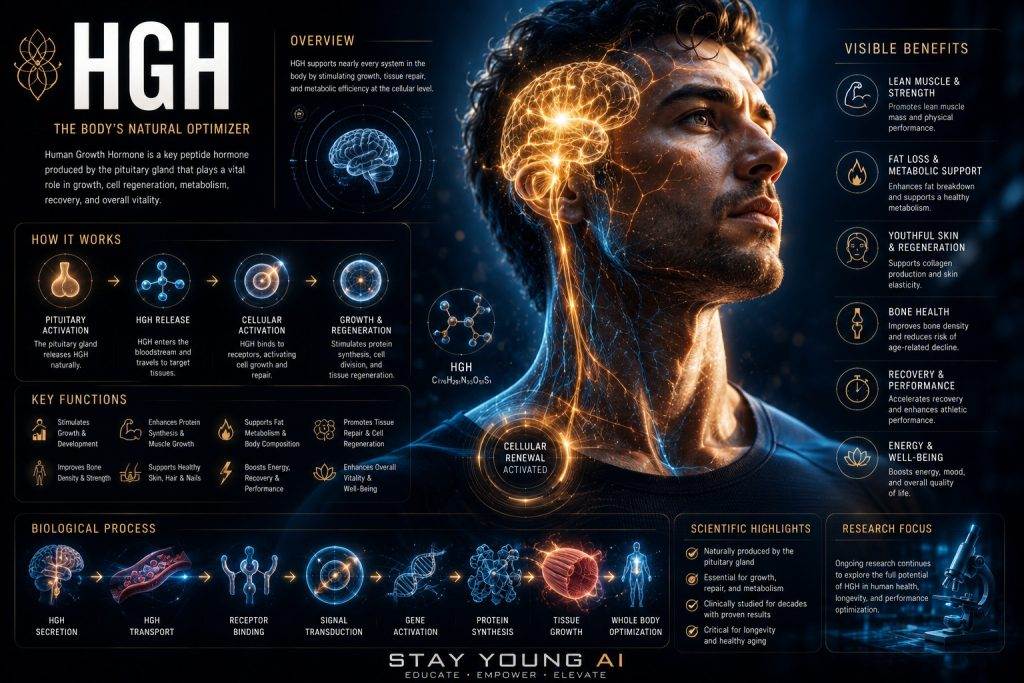
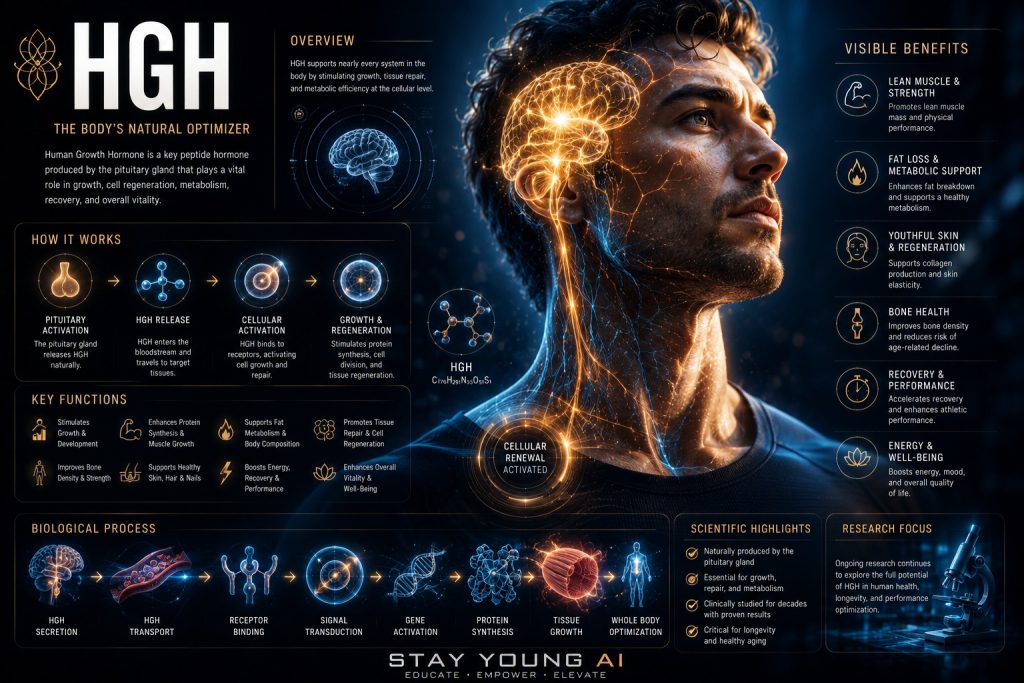
Human Growth Hormone (HGH), or somatotropin, is a peptide hormone naturally produced by the anterior pituitary gland.
Its primary physiological functions include:
- Growth during childhood
- Muscle and connective tissue repair
- Bone remodeling
- Fat metabolism
- Cellular regeneration
- Recovery following physical stress
HGH itself performs relatively few anabolic actions directly. Instead, many of its effects occur after stimulating the liver to produce IGF-1, which promotes tissue growth throughout the body.
What Is “Roid Gut”?
Roid gut refers to an enlarged, protruding abdomen observed in some highly muscular athletes despite extremely low levels of body fat.
Typical characteristics include:
- Forward abdominal protrusion
- Thickened waist appearance
- Reduced abdominal definition
- Distension even while relaxed
- Visible changes in body proportions
Importantly, this appearance is not caused by excess subcutaneous fat.
Instead, researchers and clinicians have proposed several possible contributors, including:
- Enlargement of internal organs (visceromegaly)
- Increased abdominal fluid
- Thickening of intestinal tissues
- Chronic abdominal wall expansion
- Gastrointestinal distension
Although “roid gut” is widely recognized in bodybuilding culture, it is not an officially defined medical diagnosis.
Can HGH Cause Roid Gut?
The answer is possibly—but not by itself.
Several biological mechanisms suggest that prolonged exposure to high doses of HGH could contribute to abdominal enlargement.
Increased IGF-1 Production
HGH stimulates production of IGF-1.
IGF-1 promotes growth of numerous tissues throughout the body—not only skeletal muscle.
These include:
- Liver
- Kidneys
- Intestines
- Connective tissue
- Smooth muscle
Because IGF-1 does not selectively target skeletal muscle, chronic elevation may contribute to enlargement of internal structures.
Organ Enlargement (Visceromegaly)
One of the strongest proposed mechanisms involves visceromegaly, or enlargement of internal organs.
Studies of prolonged growth hormone exposure have demonstrated increases in the size of:
- Liver
- Kidneys
- Heart
- Gastrointestinal tissues
When multiple abdominal organs enlarge simultaneously, overall abdominal volume may increase, contributing to a distended appearance.
Fluid Retention
Growth hormone commonly increases extracellular fluid.
Potential effects include:
- Water retention
- Soft tissue swelling
- Mild abdominal fullness
- Increased extracellular volume
Although fluid retention alone usually does not explain severe abdominal distension, it may amplify other contributing factors.
Intestinal Changes
Experimental research suggests IGF-1 may stimulate:
- Intestinal cell growth
- Thickening of the intestinal wall
- Increased gastrointestinal tissue mass
Over time, these changes could contribute to greater abdominal volume in susceptible individuals.
Other Causes of Roid Gut
HGH is unlikely to explain roid gut by itself.
Most experts believe abdominal distension results from multiple interacting factors.
Insulin Use
Advanced bodybuilding protocols sometimes combine HGH with insulin.
Insulin can increase:
- Glycogen storage
- Water retention
- Nutrient uptake
- Visceral fullness
The combination of insulin and HGH is frequently cited as a greater risk factor than HGH alone.
Extremely High-Calorie Diets
Professional bodybuilders often consume several thousand calories daily.
Large food volumes may contribute to:
- Gastric expansion
- Intestinal distension
- Increased intra-abdominal pressure
While temporary fullness is normal, years of consistently high intake may contribute to chronic abdominal enlargement.
Abdominal Muscle Hypertrophy
Heavy resistance training can enlarge:
- Rectus abdominis
- Obliques
- Deep core musculature
A thicker abdominal wall may increase waist circumference and alter abdominal appearance, independent of organ growth.
Other Performance-Enhancing Drugs
Elite enhancement protocols often involve multiple substances simultaneously.
These may include:
- Anabolic-androgenic steroids
- Insulin
- HGH
- Other growth-promoting compounds
Because these combinations are not ethically studied in controlled clinical trials, it is difficult to isolate the effect of any single compound.
What Does the Scientific Evidence Show?
Current scientific evidence provides partial—but not definitive—support for the HGH hypothesis.
Researchers have demonstrated:
- Growth hormone can enlarge certain internal organs.
- IGF-1 stimulates tissue growth throughout the body.
- HGH increases extracellular fluid.
- Gastrointestinal tissues respond to IGF-1 signaling.
However:
- No clinical studies specifically define or investigate “roid gut.”
- Most medical HGH research uses therapeutic doses rather than the much higher doses sometimes reported in bodybuilding communities.
- There are no controlled trials evaluating the combination of HGH, insulin, anabolic steroids, and extreme nutritional protocols typically associated with professional bodybuilding.
As a result, while the proposed mechanisms are biologically plausible, direct evidence linking HGH alone to roid gut remains limited.
Can Roid Gut Be Prevented?
There is no guaranteed method for preventing abdominal distension in individuals exposed to high-dose growth-promoting drugs.
However, general strategies discussed in the literature and expert commentary include:
- Avoiding supraphysiological HGH exposure
- Limiting unnecessary use of insulin
- Maintaining digestive health
- Following evidence-based nutrition practices
- Monitoring body composition and metabolic health
- Using medically supervised hormone therapy only when clinically indicated
For individuals receiving prescribed HGH replacement therapy for documented deficiency, treatment is typically managed at doses designed to restore physiological hormone levels rather than produce excessive tissue growth.
Common Myths
Myth: HGH always causes roid gut.
Reality: Most patients receiving medically supervised HGH replacement do not develop severe abdominal distension. Roid gut appears to be associated primarily with long-term, high-dose performance-enhancing protocols involving multiple factors.
Myth: Roid gut is simply body fat.
Reality: The condition is characterized by abdominal protrusion despite extremely low body fat percentages.
Myth: Only HGH is responsible.
Reality: Available evidence suggests that insulin use, nutrition, abdominal muscle hypertrophy, fluid retention, and other enhancement drugs likely contribute alongside HGH.
Legal Status
Human Growth Hormone is:
- Prescription-only in many countries
- Approved for specific medical conditions
- Not approved for bodybuilding or cosmetic enhancement
- Prohibited by the World Anti-Doping Agency (WADA) for athletic performance enhancement
Use outside approved medical indications carries legal, ethical, and health risks.
Conclusion
The widespread belief that HGH alone causes “roid gut” oversimplifies a complex physiological issue. Current evidence indicates that while prolonged exposure to high levels of HGH and IGF-1 may contribute to organ enlargement, intestinal tissue growth, and fluid retention, these mechanisms are only part of the picture. Advanced bodybuilding practices often combine growth hormone with insulin, anabolic-androgenic steroids, exceptionally high-calorie diets, and years of intense training, making it difficult to attribute abdominal distension to any single factor.
For individuals receiving medically supervised growth hormone replacement, the therapeutic doses used to treat documented hormone deficiency are very different from the supraphysiological doses associated with performance enhancement. As with any hormone therapy, appropriate medical oversight, individualized dosing, and careful monitoring remain essential. While “roid gut” has become a recognizable term within bodybuilding culture, the available scientific evidence supports viewing it as a multifactorial phenomenon rather than an inevitable consequence of HGH use alone.