When it comes to muscle growth, recovery, athletic performance, and healthy aging, few hormones receive as much attention as Human Growth Hormone (HGH) and testosterone. Both are essential for maintaining strength, body composition, metabolism, and physical performance, yet they work through entirely different biological mechanisms. While HGH is known for supporting tissue repair, fat metabolism, and cellular regeneration, testosterone is recognized as the body’s primary anabolic hormone responsible for muscle growth, strength, libido, and power production.
Because these hormones influence many of the same physiological systems, they’re often compared by athletes, bodybuilders, and individuals interested in hormone optimization. However, HGH and testosterone are not interchangeable. Each offers unique advantages, carries different risks, and serves distinct medical purposes. Understanding these differences is essential for making informed decisions about performance, recovery, and long-term health.
In this guide, we’ll explore:
- What HGH is
- What testosterone is
- How each hormone works
- Muscle growth and recovery
- Fat loss
- Athletic performance
- Side effects and risks
- Legal status
- Which hormone may be better depending on your goals
What Is Human Growth Hormone (HGH)?
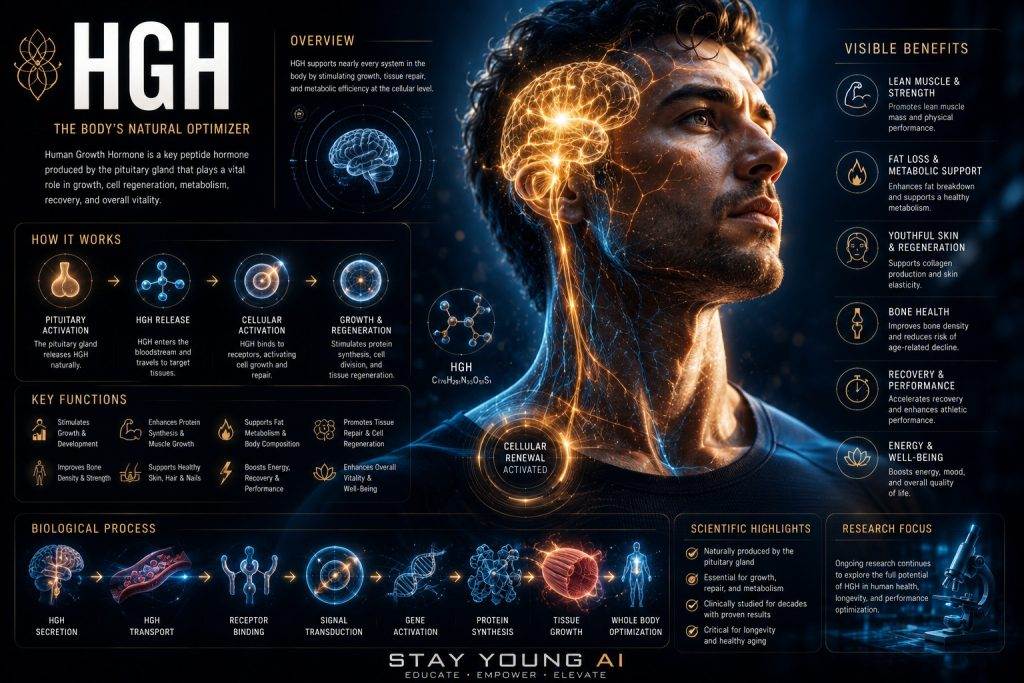
Human Growth Hormone (HGH), also known as somatotropin, is a peptide hormone produced by the anterior pituitary gland.
HGH plays a vital role in:
- Growth during childhood
- Tissue regeneration
- Protein synthesis
- Fat metabolism
- Bone remodeling
- Cellular repair
After release, HGH stimulates the liver to produce insulin-like growth factor-1 (IGF-1), which mediates many of its anabolic and regenerative effects throughout the body.
What Is Testosterone?
Testosterone is the body’s primary androgenic steroid hormone.
It is produced primarily in:
- Testes in men
- Ovaries in women
- Adrenal glands in both sexes
Testosterone regulates numerous physiological functions including:
- Muscle growth
- Strength
- Bone density
- Libido
- Red blood cell production
- Mood
- Energy levels
Although present in both men and women, testosterone concentrations are substantially higher in men, making it one of the primary hormones responsible for male physical development and performance.
How HGH Works
HGH primarily functions by initiating a hormonal cascade.
After secretion:
- HGH binds to receptors in the liver.
- The liver produces IGF-1.
- IGF-1 stimulates muscle growth and tissue repair.
- HGH simultaneously promotes fat metabolism and collagen production.
Rather than acting directly on skeletal muscle, many of HGH’s anabolic effects occur through IGF-1.
How Testosterone Works
Testosterone acts much more directly.
It binds to androgen receptors located in:
- Skeletal muscle
- Bone
- Nervous system
- Reproductive tissues
Activation of these receptors increases:
- Muscle protein synthesis
- Strength development
- Red blood cell production
- Neuromuscular efficiency
Unlike HGH, testosterone directly stimulates muscle hypertrophy through androgen receptor activation.
HGH Benefits
Tissue Repair
One of HGH’s strongest therapeutic effects is promoting tissue repair.
Potential benefits include:
- Tendon healing
- Ligament repair
- Collagen production
- Connective tissue regeneration
These properties have made HGH an area of interest in rehabilitation and regenerative medicine.
Fat Loss
HGH increases lipolysis, allowing the body to utilize stored fat for energy.
Potential effects include:
- Reduced visceral fat
- Improved body composition
- Increased fat oxidation
- Better metabolic efficiency
These effects are often more pronounced during calorie restriction and regular exercise.
Recovery
Many athletes have investigated HGH because it may support:
- Recovery after exercise
- Tissue regeneration
- Healing following injury
- Sleep-related recovery processes
Its recovery benefits appear to be more significant than its direct muscle-building effects.
Testosterone Benefits
Muscle Growth
Testosterone is one of the body’s most powerful anabolic hormones.
Benefits include:
- Increased muscle protein synthesis
- Greater lean muscle mass
- Enhanced muscle strength
- Improved training adaptations
These effects explain why testosterone has long been associated with athletic performance and resistance training.
Strength
Higher testosterone levels support:
- Increased force production
- Greater power output
- Improved resistance training performance
- Better neuromuscular efficiency
These adaptations make testosterone particularly valuable for strength- and power-based sports.
Endurance Support
Testosterone stimulates red blood cell production, increasing the blood’s oxygen-carrying capacity.
Potential benefits include:
- Improved endurance
- Better exercise tolerance
- Enhanced aerobic performance
These effects complement its role in strength and muscle development.
Mood and Vitality
Healthy testosterone levels contribute to:
- Improved motivation
- Better mood
- Increased libido
- Enhanced energy levels
- Improved cognitive function
Hormonal balance influences both physical and psychological performance.
HGH vs Testosterone for Muscle Growth
Although both hormones influence lean body mass, testosterone generally produces stronger direct anabolic effects.
HGH
Supports:
- Recovery
- Collagen synthesis
- Lean tissue preservation
- Long-term body recomposition
Testosterone
Directly increases:
- Muscle protein synthesis
- Muscle size
- Strength
- Training performance
For individuals whose primary goal is maximizing muscle hypertrophy, testosterone has a more immediate anabolic effect than HGH.
HGH vs Testosterone for Fat Loss
HGH generally demonstrates stronger effects on fat metabolism.
Potential advantages include:
- Increased fat oxidation
- Reduced abdominal fat
- Improved body composition
- Better preservation of lean tissue during weight loss
Testosterone can also improve body composition by increasing muscle mass, which indirectly raises resting energy expenditure, but its primary role is anabolic rather than lipolytic.
Athletic Performance Comparison
HGH
Best known for:
- Recovery
- Tissue healing
- Joint support
- Connective tissue repair
- Long-term body recomposition
Testosterone
Best known for:
- Muscle growth
- Strength
- Power
- Speed
- High-intensity performance
While both hormones influence athletic performance, they do so through different mechanisms and are not interchangeable.
Side Effects and Risks
HGH
Potential adverse effects include:
- Fluid retention
- Joint pain
- Carpal tunnel syndrome
- Insulin resistance
- Elevated blood glucose
- Enlargement of soft tissues with prolonged misuse
Long-term excessive exposure may also increase concerns regarding abnormal tissue growth in susceptible individuals.
Testosterone
Potential adverse effects include:
- Acne
- Elevated hematocrit
- Gynecomastia
- Infertility
- Testicular atrophy
- Cardiovascular complications when misused
- Mood changes
Supraphysiological doses used outside medical supervision significantly increase these risks.
Natural Ways to Support HGH and Testosterone
Healthy lifestyle habits can help optimize natural hormone production.
Strategies include:
- Resistance training
- High-intensity interval exercise
- Adequate sleep
- Maintaining a healthy body weight
- Consuming sufficient protein
- Correcting nutrient deficiencies (such as vitamin D, zinc, and magnesium)
- Managing chronic stress
These interventions support endocrine health without the risks associated with non-medical hormone use.
Legal Status
HGH
- Prescription only
- FDA-approved for specific medical conditions
- Not approved for anti-aging or bodybuilding
- Prohibited by the World Anti-Doping Agency (WADA)
Testosterone
- Prescription only when medically indicated
- Approved for testosterone replacement therapy (TRT) in individuals with confirmed deficiency
- Misuse for performance enhancement is prohibited in competitive sports
Both hormones should only be used under appropriate medical supervision for approved clinical indications.
Which Hormone Is Better?
The answer depends entirely on the objective.
HGH may be more appropriate if your goal is:
- Tissue repair
- Joint health
- Recovery
- Fat loss
- Healthy aging under appropriate medical supervision
Testosterone may be more appropriate if your goal is:
- Muscle growth
- Strength
- Power
- Athletic performance
- Restoring testosterone deficiency under medical care
Because these hormones perform different physiological functions, comparing them as direct competitors can be misleading. In medicine, they are prescribed for different conditions, and in healthy individuals there is no evidence-based rationale for using one as a substitute for the other outside approved indications.
Conclusion
Human Growth Hormone and testosterone are two of the body’s most important anabolic hormones, but they achieve their effects through distinct biological pathways. HGH primarily supports tissue regeneration, collagen synthesis, fat metabolism, and recovery through stimulation of IGF-1 production, whereas testosterone directly activates androgen receptors to increase muscle protein synthesis, strength, and physical performance.
Rather than asking which hormone is universally “better,” a more accurate question is which physiological role is most relevant to a specific medical need or performance goal. For patients with documented hormone deficiencies, appropriately prescribed therapy can significantly improve health and quality of life. For healthy individuals, however, the potential risks of non-medical hormone use generally outweigh any perceived performance benefits. Optimizing sleep, nutrition, exercise, and overall endocrine health remains the safest and most sustainable approach to maximizing human performance.