AHK-Cu Peptide: A Copper Peptide for Hair and Skin Health Research
Copper peptides have become an area of growing interest in regenerative medicine and cosmetic science due to their potential role in supporting healthy skin, hair, and tissue repair. One peptide attracting increasing attention is AHK-Cu, a naturally inspired copper-binding peptide studied for its regenerative properties.
Researchers are investigating AHK-Cu for its ability to influence cellular signaling involved in hair follicle function, collagen production, and skin renewal. While research continues, it has become a notable peptide in studies related to healthy aging and aesthetic wellness.
This article explores what AHK-Cu is, how it works, and what current research suggests about its potential applications.
What Is AHK-Cu?
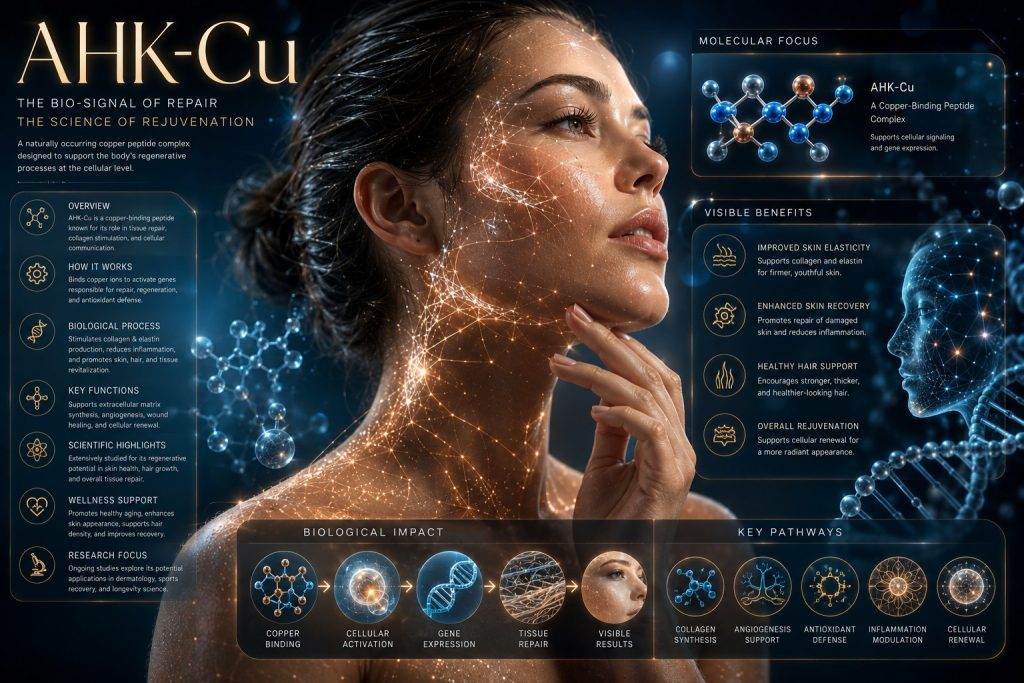
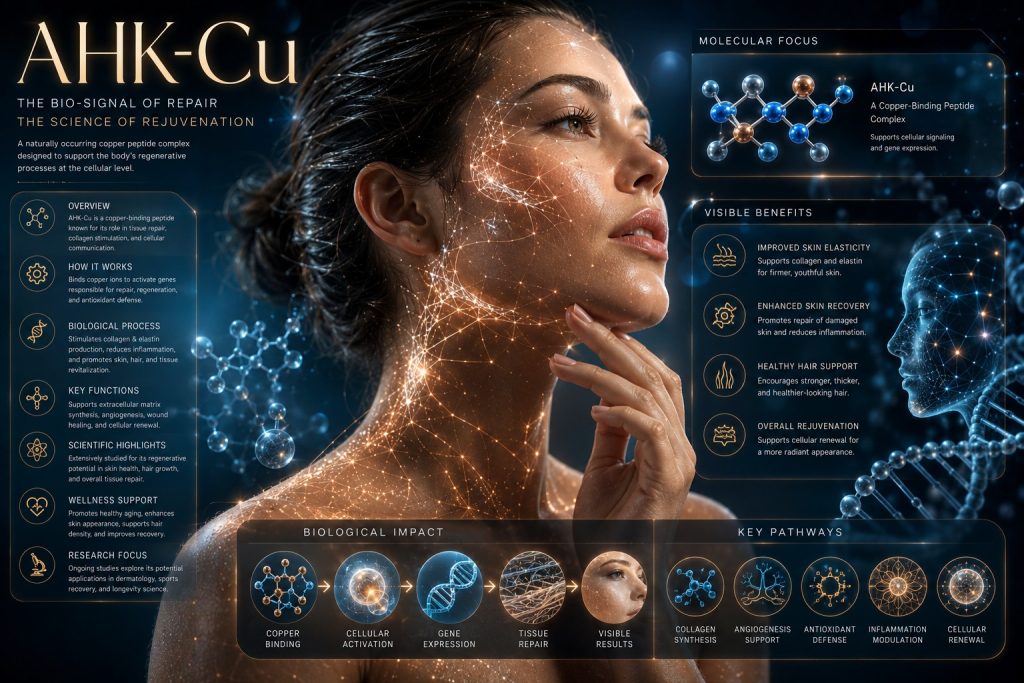
AHK-Cu is a copper peptide composed of the tripeptide AHK (Alanine-Histidine-Lysine) bound to a copper ion (Cu²⁺).
Copper plays an essential role in numerous biological processes, including:
- Cellular repair
- Collagen formation
- Antioxidant defense
- Tissue regeneration
- Hair follicle function
By combining AHK with copper, researchers have developed a peptide that may help support cellular activities involved in maintaining healthy skin and hair.
How Does AHK-Cu Work?
Cellular Signaling
AHK-Cu functions as a signaling peptide, meaning it may help regulate communication between cells involved in tissue maintenance and repair.
Researchers believe this signaling activity may support natural regenerative processes.
Hair Follicle Support
Hair follicles undergo continuous cycles of growth, rest, and shedding.
Research suggests AHK-Cu may help support:
- Healthy hair follicle activity
- Normal hair growth cycles
- Cellular health within the scalp
- Hair density and thickness
These potential effects have made AHK-Cu an area of interest in hair restoration research.
Collagen Production
Collagen is one of the primary structural proteins responsible for maintaining skin strength and elasticity.
Studies indicate that copper peptides may help support:
- Collagen synthesis
- Elastin production
- Skin firmness
- Tissue remodeling
Antioxidant Activity
Oxidative stress can contribute to premature skin aging and cellular damage.
Researchers are investigating whether AHK-Cu may help support the body’s natural antioxidant defenses, protecting cells from oxidative damage.
Potential Benefits of AHK-Cu
1. Hair Growth Support
One of the most widely studied applications of AHK-Cu involves its potential role in supporting healthy hair growth.
Researchers are investigating whether it may help:
- Promote healthier hair follicles
- Improve hair density
- Support thicker-looking hair
- Encourage normal growth cycles
2. Skin Health
Healthy skin depends on efficient collagen production and cellular renewal.
Research suggests AHK-Cu may support:
- Skin firmness
- Elasticity
- Hydration
- Overall skin appearance
3. Tissue Repair
Researchers continue to study AHK-Cu for its potential influence on tissue regeneration.
Areas of investigation include:
- Cellular repair
- Tissue remodeling
- Recovery following minor skin damage
- Healthy wound-healing processes
4. Healthy Aging
As skin ages, collagen production naturally declines.
Researchers are exploring whether AHK-Cu may help support biological processes associated with maintaining youthful-looking skin and healthy tissue function.
5. Cellular Regeneration
Copper peptides play a role in cellular communication and repair.
Scientists continue to investigate how AHK-Cu may support:
- Healthy cell turnover
- Structural protein production
- Tissue maintenance
- Regenerative signaling
AHK-Cu vs. GHK-Cu
AHK-Cu and GHK-Cu are both copper peptides, but they differ in their amino acid sequences and areas of research.
AHK-Cu
- Alanine-Histidine-Lysine sequence
- Frequently studied for hair follicle support
- Investigated in cosmetic and regenerative research
GHK-Cu
- Glycine-Histidine-Lysine sequence
- Extensively studied for skin regeneration
- Investigated for wound healing and tissue repair
- One of the most researched copper peptides
Although both peptides bind copper and support regenerative processes, researchers continue to investigate their unique biological activities.
Current Research
Scientific studies involving AHK-Cu continue to explore its potential role in:
- Hair growth
- Skin rejuvenation
- Collagen production
- Tissue regeneration
- Healthy aging
- Cosmetic science
Much of the available evidence comes from laboratory and preclinical research. Additional human clinical studies are needed to better understand its long-term safety and effectiveness.
Safety and Considerations
AHK-Cu has primarily been studied in research and cosmetic settings.
Important considerations include:
- Human clinical data remain limited.
- Long-term safety has not been fully established.
- Individual responses may vary.
- Additional clinical trials are needed to determine optimal applications.
Anyone considering peptide-based therapies should consult a qualified healthcare professional.
Frequently Asked Questions
What is AHK-Cu?
AHK-Cu is a copper-binding peptide composed of Alanine-Histidine-Lysine attached to a copper ion. It is studied for its potential effects on hair growth, skin health, and tissue regeneration.
What is AHK-Cu used for?
Researchers investigate AHK-Cu for its potential role in supporting healthy hair follicles, collagen production, skin rejuvenation, and tissue repair.
Is AHK-Cu the same as GHK-Cu?
No. While both are copper peptides, they have different amino acid sequences and may influence different biological pathways.
Can AHK-Cu promote hair growth?
Research has explored its potential role in supporting healthy hair follicles and normal hair growth cycles. However, more human studies are needed before definitive conclusions can be made.
Is AHK-Cu approved as a medical treatment?
Research is ongoing, and regulatory status may vary depending on the intended use and region.
Final Thoughts
AHK-Cu is an emerging copper peptide with growing interest in hair restoration, skin rejuvenation, and regenerative medicine. Its ability to support cellular signaling, collagen production, and tissue maintenance has made it an important subject of scientific investigation.
While early research is promising, additional human clinical studies are needed to fully understand its safety, effectiveness, and long-term applications. As peptide science continues to evolve, AHK-Cu remains a valuable area of research in healthy aging and aesthetic wellness.
Disclaimer
This article is provided for educational and informational purposes only. AHK-Cu is an area of ongoing scientific research, and current findings continue to evolve. This content is not intended to diagnose, treat, cure, or prevent any disease and should not be considered medical advice. Always consult a qualified healthcare professional regarding health-related decisions.