Ipamorelin is a research peptide commonly studied for its relationship to growth hormone signaling, ghrelin receptor activation, tissue repair, recovery, sleep quality, and cellular regeneration pathways.
It is often discussed as a selective growth hormone secretagogue, meaning it is studied for its ability to signal the pituitary gland to release growth hormone in a natural pulse-like pattern. Unlike some older growth hormone secretagogues, Ipamorelin is frequently highlighted in research for its selectivity and targeted mechanism of action.
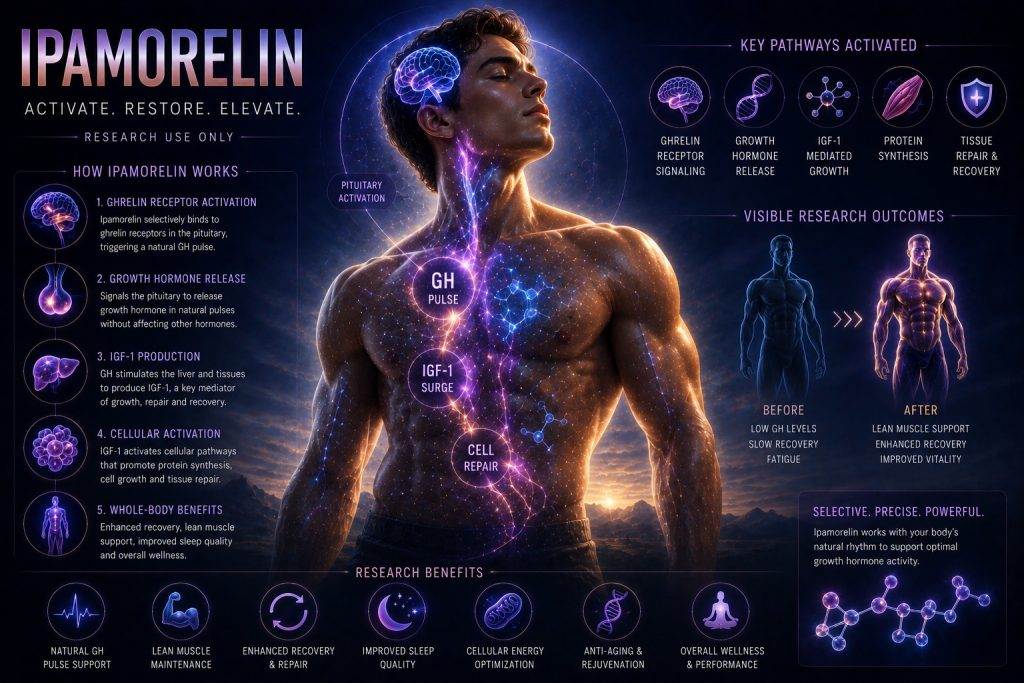
The image highlights the central concept behind Ipamorelin research: activation of ghrelin receptor signaling may support growth hormone release, which can then influence IGF-1 production, cellular repair pathways, protein synthesis, tissue recovery, and whole-body wellness research.
What Is Ipamorelin?
Ipamorelin is a peptide that has been studied for its ability to bind to ghrelin receptors, also known as growth hormone secretagogue receptors. These receptors play a role in signaling the pituitary gland to release growth hormone.
Growth hormone is involved in several biological processes, including:
Cellular repair
Tissue recovery
Protein synthesis
Metabolism
Sleep-related recovery
IGF-1 signaling
Lean muscle maintenance
Regenerative research pathways
Because of this mechanism, Ipamorelin is frequently discussed in research involving recovery, performance, sleep, tissue repair, and aging-related wellness studies.
How Ipamorelin Works
The image breaks down Ipamorelin’s research pathway into five major steps.
1. Ghrelin Receptor Activation
Ipamorelin is studied for its ability to selectively bind to ghrelin receptors in the pituitary gland.
This receptor activation may help trigger a growth hormone release signal. In research settings, this is often described as supporting a natural growth hormone pulse rather than forcing constant hormone elevation.
2. Growth Hormone Release
After ghrelin receptor activation, the pituitary gland may release growth hormone in pulses.
Growth hormone is a major signaling hormone involved in repair, recovery, metabolism, and cellular function. Ipamorelin is studied because of its relationship to this growth hormone release process.
3. IGF-1 Production
Growth hormone can signal the liver and other tissues to produce IGF-1, also known as insulin-like growth factor 1.
IGF-1 is involved in growth, repair, recovery, and cellular adaptation research. It acts as an important downstream mediator of many growth hormone-related effects.
4. Cellular Activation
Through growth hormone and IGF-1-related signaling, cellular repair pathways may become activated.
These pathways are commonly studied in connection with:
Protein synthesis
Tissue repair
Muscle maintenance
Cell growth
Recovery after stress
Regenerative biology
5. Whole-Body Research Benefits
The image also connects Ipamorelin research to broader wellness-related areas, including:
Enhanced recovery
Lean muscle support
Improved sleep quality
Cellular energy optimization
Tissue repair and recovery
Overall wellness and performance research
These are research areas and should not be interpreted as guaranteed outcomes or medical claims.
Key Pathways Activated
Ipamorelin is commonly studied in connection with several biological pathways.
Ghrelin Receptor Signaling
Ipamorelin interacts with ghrelin receptors, which are part of the growth hormone secretagogue receptor family. This pathway is central to its role in growth hormone release research.
Growth Hormone Release
Ipamorelin may stimulate growth hormone release through pituitary signaling. Research interest focuses on how this release pattern may support downstream repair and recovery processes.
IGF-1-Mediated Growth
Growth hormone can support IGF-1 production, which plays a role in cellular growth, tissue remodeling, and repair-related pathways.
Protein Synthesis
Protein synthesis is essential for tissue maintenance and repair. Ipamorelin is often discussed in relation to signaling pathways that may influence protein turnover and recovery.
Tissue Repair and Recovery
The image highlights tissue repair and recovery as key research themes. Ipamorelin is studied for its potential relationship to recovery after physical stress and cellular repair signaling.
Research Benefits Highlighted in the Image
The visual identifies several major research areas associated with Ipamorelin.
Natural Growth Hormone Pulse Support
Ipamorelin is studied for its ability to support pulse-like growth hormone signaling through ghrelin receptor activation.
Lean Muscle Maintenance
Growth hormone and IGF-1 pathways are involved in muscle maintenance and tissue repair. Ipamorelin is commonly researched in connection with lean tissue support.
Enhanced Recovery and Repair
Recovery is one of the central research themes for Ipamorelin. The peptide is studied for its potential relationship to tissue repair, cellular recovery, and post-stress adaptation.
Improved Sleep Quality
Growth hormone release is closely tied to sleep and recovery cycles. Ipamorelin is often discussed in research involving sleep quality and recovery optimization.
Cellular Energy Optimization
Cellular repair, mitochondrial activity, and energy metabolism are connected to overall recovery and performance research. Ipamorelin is commonly included in discussions of cellular optimization.
Anti-Aging and Rejuvenation Research
Because growth hormone and IGF-1 pathways are involved in tissue repair and cellular maintenance, Ipamorelin is frequently studied in aging-related wellness and regenerative research.
Overall Wellness and Performance
The broader research interest in Ipamorelin includes performance, recovery, tissue resilience, and general wellness optimization.
Visible Research Outcomes
The image presents a before-and-after research concept.
Before
The “before” side represents low growth hormone levels, slower recovery, fatigue, and reduced cellular repair signaling.
After
The “after” side represents lean muscle support, enhanced recovery, improved vitality, and stronger repair signaling.
This visual is intended to explain the research concept behind Ipamorelin: targeted signaling may support growth hormone release, which may then influence recovery, repair, and cellular adaptation pathways.
Why Ipamorelin Is Studied
Ipamorelin is important in research because of its selective action on growth hormone-related pathways.
Researchers are interested in Ipamorelin because it may help explain:
How ghrelin receptor activation affects growth hormone release
How growth hormone influences IGF-1 production
How IGF-1 supports cellular repair and adaptation
How recovery pathways are regulated after physical stress
How sleep and tissue repair may connect to growth hormone signaling
How aging-related changes may affect repair and recovery
This makes Ipamorelin a relevant peptide in research involving hormone signaling, recovery, performance, tissue repair, and regenerative science.
Important Notes
Ipamorelin should be discussed as a research peptide and not as a guaranteed treatment or performance-enhancing product.
Although the image uses strong visual language related to recovery, vitality, muscle support, and rejuvenation, website content should remain educational and compliant.
The proper way to describe Ipamorelin is as a peptide studied for its relationship to ghrelin receptor signaling, growth hormone release, IGF-1 production, cellular repair, tissue recovery, and wellness-related research.
Educational Disclaimer
This content is provided for educational and informational purposes only. It is not medical advice and is not intended to diagnose, treat, cure, or prevent any disease. Ipamorelin is discussed here strictly as a research peptide. Any handling, testing, or use should follow applicable research, laboratory, and regulatory standards.