Kisspeptin-10 is a research peptide commonly studied for its relationship to hormone signaling, reproductive-axis regulation, hypothalamic function, and neuroendocrine balance.
It is part of the kisspeptin signaling family and is frequently discussed in research involving the hypothalamic-pituitary-gonadal axis, often referred to as the **HPG axis**. This pathway plays a central role in the regulation of reproductive hormones, including gonadotropin-releasing hormone, luteinizing hormone, follicle-stimulating hormone, testosterone, estradiol, and progesterone-related signaling.
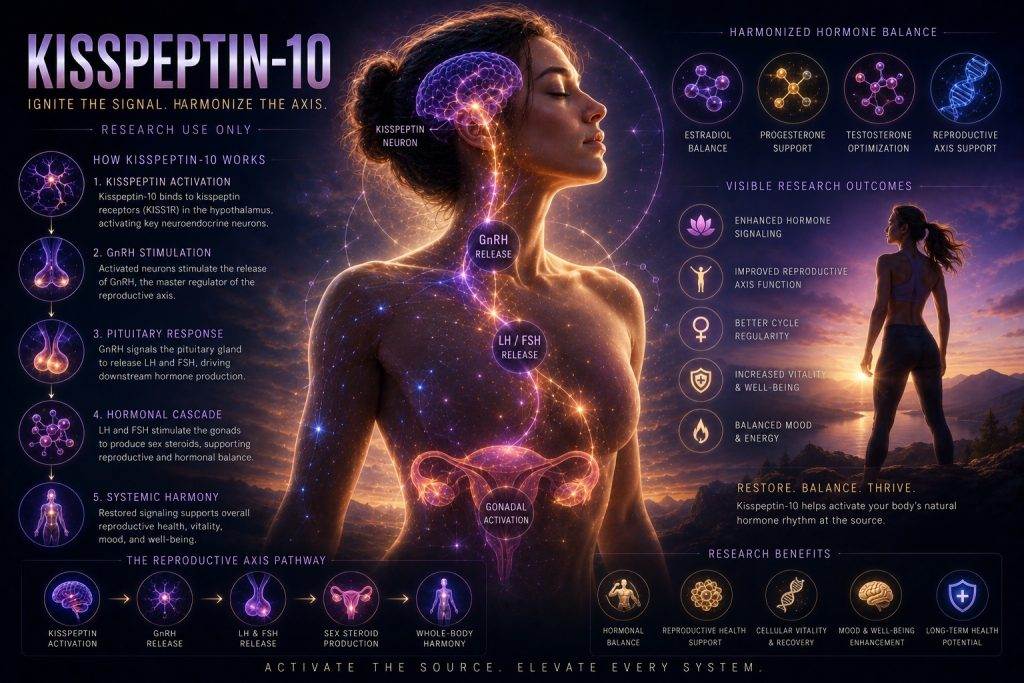
The image highlights the central concept behind Kisspeptin-10 research: activation of kisspeptin pathways may stimulate GnRH release, which then influences downstream pituitary and gonadal hormone activity. Because of this, Kisspeptin-10 has become a subject of interest in reproductive-health, hormone-balance, vitality, and endocrine research.
What Is Kisspeptin-10?
Kisspeptin-10 is a peptide fragment studied for its ability to interact with **kisspeptin receptors**, also known as **KISS1R**, in the hypothalamus.
In research settings, it is commonly studied in connection with:
Hormonal balance
GnRH signaling
LH and FSH release
Testosterone-related signaling
Estradiol balance
Progesterone-related support
Reproductive-axis function
Cycle regularity research
Mood and well-being research
Neuroendocrine pathway support
Researchers are interested in Kisspeptin-10 because it works at the level of upstream hormonal signaling rather than acting like a direct hormone replacement compound.
How Kisspeptin-10 Works
The image presents Kisspeptin-10 as a sequence of neuroendocrine activation steps that begin in the brain and move through the reproductive hormone axis.
1. Kisspeptin Activation
Kisspeptin-10 binds to kisspeptin receptors in the hypothalamus.
This activation stimulates key neuroendocrine neurons involved in reproductive hormone control and signaling.
2. GnRH Stimulation
Once the hypothalamic kisspeptin pathway is activated, it may stimulate the release of **gonadotropin-releasing hormone**, or **GnRH**.
GnRH is considered a master regulator of the reproductive axis and plays a key role in controlling downstream hormonal signaling.
3. Pituitary Response
GnRH then signals the pituitary gland to release **LH** and **FSH**, which are two major regulatory hormones in reproductive-endocrine function.
This pituitary response is a central part of the hormone cascade influenced by kisspeptin signaling.
4. Hormonal Cascade
LH and FSH may stimulate the gonads to support the production of sex steroids and other hormone-related responses.
This is why Kisspeptin-10 is often studied in connection with:
Testosterone optimization research
Estradiol balance research
Progesterone-support research
Reproductive-axis activation
Cycle regularity
Hormonal harmony
5. Systemic Harmony
Because the reproductive axis influences mood, energy, vitality, and overall endocrine balance, Kisspeptin-10 is frequently discussed in broader wellness and whole-body hormone-signaling research.
The Reproductive Axis Pathway
The image summarizes the reproductive-axis pathway like this:
Kisspeptin activation
GnRH release
LH and FSH release
Sex steroid production
Whole-body harmony
This sequence helps explain why Kisspeptin-10 is important in neuroendocrine and reproductive-health research.
Benefits Highlighted in the Image
The visual identifies several major research themes associated with Kisspeptin-10.
Hormonal Balance
Kisspeptin-10 is studied for its potential role in supporting balanced hormone signaling through the HPG axis.
Reproductive Health Support
Because it works upstream in the reproductive signaling chain, it is commonly researched for its relationship to reproductive function and endocrine coordination.
Estradiol Balance
The image highlights estradiol balance as one area of hormone-harmony research tied to Kisspeptin-10.
Progesterone Support
Kisspeptin signaling is also relevant in research involving female reproductive hormone balance and progesterone-related endocrine support.
Testosterone Optimization
Kisspeptin-10 is frequently discussed in testosterone-related research because of its effect on GnRH, LH, and downstream gonadal signaling.
Better Cycle Regularity
In female hormone research, Kisspeptin-10 is often studied for its possible relationship to cycle regulation and coordinated reproductive signaling.
Mood and Well-Being
Because hormone balance can influence mood, energy, and general vitality, Kisspeptin-10 is also associated with broader mood and well-being research.
Vitality and Recovery
The image connects Kisspeptin-10 with improved vitality, energy balance, and whole-body endocrine support.
Long-Term Health Potential
The broader research interest includes how optimized hormone signaling may support long-term endocrine resilience and wellness.
Visible Research Outcomes
The image presents several research outcomes associated with Kisspeptin-10:
Enhanced hormone signaling
Improved reproductive-axis function
Better cycle regularity
Increased vitality and well-being
Balanced mood and energy
These are research concepts and should be presented as educational themes rather than guaranteed outcomes.
Why Kisspeptin-10 Is Studied
Kisspeptin-10 is important because it acts near the top of the hormone-regulation pathway.
Researchers are interested in it because it may help explain:
How hypothalamic signaling controls reproductive hormones
How GnRH release influences LH and FSH output
How upstream hormone signaling affects testosterone, estradiol, and progesterone balance
How reproductive-axis coordination affects mood, vitality, and endocrine rhythm
How neuroendocrine pathways may be supported without directly replacing hormones
This makes Kisspeptin-10 highly relevant in hormone-balance and reproductive-axis research.
Dosage / Research Protocol Information
Kisspeptin-10 dosage can vary depending on the research model, protocol design, route of administration, and intended outcome being studied.
In research-use discussions, Kisspeptin-10 is often referenced in ranges such as **100 mcg to 500 mcg per administration**, commonly used **once daily** or according to a structured protocol cycle, depending on the study design.
Some research protocols evaluate Kisspeptin-10 in short structured cycles because it is being studied for signaling response rather than constant exposure. Frequency, duration, and timing can vary based on whether the focus is reproductive-axis activity, hormone-response evaluation, or broader endocrine research.
Because Kisspeptin-10 works upstream in neuroendocrine signaling, protocol design should be approached carefully and within a structured research or medically supervised setting.
This dosage information is provided strictly for **educational and research-reference purposes only**. It is not a medical recommendation, treatment instruction, or self-administration guide.
What Kisspeptin-10 Is Commonly Stacked With
In research and peptide discussions, Kisspeptin-10 is sometimes considered alongside other compounds or strategies that relate to reproductive-axis and hormone-balance support.
Common stack discussions may include:
Gonadorelin
Because both compounds relate to GnRH-axis signaling, they may be discussed together in reproductive-endocrine research. However, they act differently, and pairing decisions should be based on the specific protocol being evaluated.
HCG
In some hormone and fertility-related discussions, Kisspeptin-10 may be considered alongside HCG because both are associated with downstream reproductive signaling. Research goals and endocrine context matter when evaluating this type of pairing.
Enclomiphene or Clomiphene-Related Protocols
In some endocrine-support discussions, Kisspeptin-10 is mentioned alongside selective estrogen receptor modulator strategies because both may relate to the body’s own hormone signaling pathways. These combinations should only be evaluated under qualified supervision.
Hormone-Balance Support Strategies
Kisspeptin-10 is also often discussed as part of broader hormone-balance research that may include sleep optimization, stress reduction, recovery support, and overall endocrine health assessment.
Wellness and Reproductive Support Protocols
Depending on the research objective, supportive strategies may include nutritional support, fertility-focused monitoring, menstrual-cycle tracking, testosterone monitoring, or broader endocrine evaluation.
Best Stacking Approach
The best way to think about a Kisspeptin-10 stack is not simply adding more compounds, but understanding **why** it is being used.
Kisspeptin-10 is usually most relevant in protocols involving:
Hormone signaling support
Reproductive-axis research
Fertility-related pathways
Cycle regularity evaluation
Testosterone or estradiol response assessment
Mood, vitality, and endocrine rhythm research
Because of its upstream signaling role, it is often best evaluated as part of a broader hormone and endocrine strategy rather than treated like a stand-alone general wellness peptide.
Important Notes
Kisspeptin-10 should be discussed as a **research peptide** and not as a guaranteed treatment or hormone-replacement product.
Although the image uses strong visual language related to hormone harmony, reproductive balance, vitality, and well-being, website content should remain educational and compliant.
The proper way to describe Kisspeptin-10 is as a peptide studied for its relationship to kisspeptin receptor activation, GnRH signaling, LH and FSH release, reproductive-axis support, hormone balance, and neuroendocrine coordination.
Educational Disclaimer
This content is provided for educational and informational purposes only. It is not medical advice and is not intended to diagnose, treat, cure, or prevent any disease. Kisspeptin-10 is discussed here strictly as a research peptide. Any handling, testing, or use should follow applicable research, laboratory, and regulatory standards.
Kisspeptin-10 is a research peptide studied for its relationship to hormone signaling, reproductive-axis function, GnRH release, LH and FSH activity, and overall neuroendocrine balance. Because it acts upstream in the hormone-regulation pathway, it is commonly discussed in reproductive-health, hormone-balance, and vitality-related research.