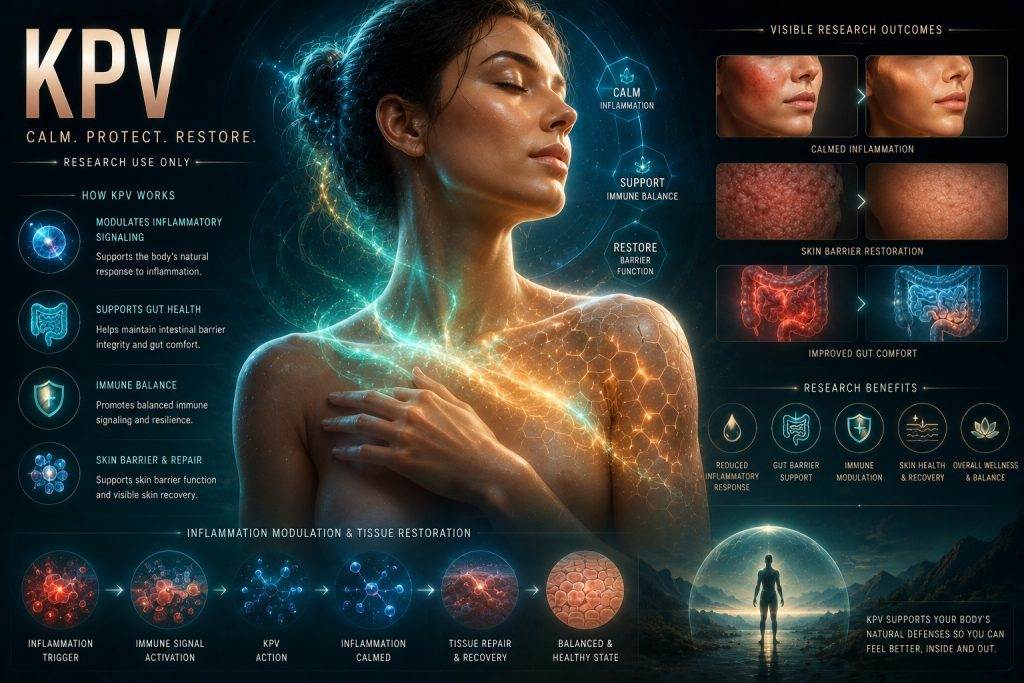
KPV is a research peptide commonly studied for its relationship to inflammatory signaling, immune balance, gut barrier integrity, skin recovery, and tissue restoration.
KPV is a short peptide fragment derived from alpha-melanocyte-stimulating hormone, often written as **Lys-Pro-Val**. In research settings, it is frequently discussed for its potential role in helping modulate inflammatory responses while supporting barrier function in tissues such as the skin and gastrointestinal tract.
The image highlights the main concept behind KPV research: calming inflammatory activity, supporting immune balance, restoring barrier function, and promoting tissue recovery. Because of these properties, KPV has become a subject of interest in gut-health, skin-health, and wellness-related peptide research.
What Is KPV?
KPV is a tripeptide fragment associated with anti-inflammatory and barrier-support research.
It is commonly studied in connection with:
Inflammatory response modulation
Immune signaling balance
Gut barrier support
Intestinal comfort research
Skin barrier restoration
Tissue repair and recovery
Overall wellness and balance
Researchers are interested in KPV because it may support the body’s natural response to inflammatory stress without being presented as a broad immune suppressant. This has made it a relevant peptide in studies involving the skin, digestive system, and tissue recovery pathways.
How KPV Works
The image presents KPV as working through several key pathways related to inflammation modulation and tissue restoration.
1. Modulates Inflammatory Signaling
KPV is studied for its potential role in supporting the body’s natural response to inflammation.
Rather than simply blocking normal biological processes, research interest often focuses on how KPV may help balance inflammatory signaling in a way that supports tissue comfort and recovery.
2. Supports Gut Health
KPV is commonly discussed in gut-health research because of its relationship to intestinal barrier integrity and digestive comfort.
Research interest includes how KPV may help support the gut lining, calm inflammatory activity in the gastrointestinal environment, and promote a healthier barrier response.
3. Immune Balance
Immune signaling is closely tied to inflammation and tissue recovery. KPV is studied for its potential ability to support balanced immune signaling and resilience.
This makes it relevant in research involving immune modulation, tissue response, and recovery from inflammatory stress.
4. Skin Barrier and Repair
The image emphasizes skin barrier restoration and visible skin recovery. KPV is frequently discussed in research involving skin wellness, tissue support, and barrier function.
This includes interest in how KPV may help support calmer skin appearance, improved barrier integrity, and recovery-related signaling in skin tissue.
Inflammation Modulation and Tissue Restoration
The visual shows a progression from inflammatory stress toward a more balanced and restored state.
That sequence includes:
Inflammation trigger
Immune signal activation
KPV action
Inflammation calmed
Tissue repair and recovery
Balanced and healthy state
This is the core concept behind KPV research. When tissues experience irritation or inflammatory signaling, KPV is studied for its possible role in supporting a calmer, more balanced recovery process.
Visible Research Outcomes
The image highlights three main visual research themes.
Calmed Inflammation
KPV is frequently associated with research involving reduced visible inflammatory stress and improved tissue calmness.
Skin Barrier Restoration
The peptide is studied in relation to barrier support and visible skin recovery, particularly where tissue resilience and repair are part of the research focus.
Improved Gut Comfort
KPV is also associated with gut-health research, including intestinal comfort and barrier-function support.
These are research-based themes and should be presented as educational concepts rather than guaranteed outcomes.
Research Benefits Highlighted in the Image
The visual identifies several major research areas associated with KPV.
Reduced Inflammatory Response
KPV is commonly studied for its connection to calmer inflammatory signaling and tissue response.
Gut Barrier Support
Researchers are interested in KPV for its potential role in supporting intestinal lining integrity and digestive comfort.
Immune Modulation
KPV is often discussed in the context of balanced immune signaling and resilience.
Skin Health and Recovery
Skin barrier support and recovery are central research themes for KPV, especially in studies involving visible tissue calmness and barrier restoration.
Overall Wellness and Balance
Because inflammation, barrier integrity, and immune signaling are interconnected, KPV is also researched in broader wellness contexts.
Why KPV Is Studied
KPV is important in peptide research because it sits at the intersection of inflammation control, tissue recovery, gut support, and skin barrier health.
Researchers are interested in KPV because it may help explain:
How inflammatory signaling can be modulated
How tissue recovery can be supported
How the gut barrier responds to inflammatory stress
How immune balance influences healing and resilience
How skin barrier function is maintained and restored
This makes KPV a relevant peptide in research involving digestive wellness, inflammatory signaling, skin-health science, and tissue repair.
Dosage / Research Protocol Information
KPV dosage can vary depending on the research protocol, delivery method, study design, and intended research outcome.
In research-use discussions, KPV is commonly referenced in ranges such as **250 mcg to 500 mcg per administration**, often used **once or twice daily** depending on the protocol being evaluated. Some research contexts also explore KPV in **capsule, topical, or solution-based formats**, depending on whether the focus is gut-related research, skin-related research, or systemic peptide study.
Because KPV is studied across multiple applications, protocol structure may differ based on the tissue or pathway being evaluated. Frequency, concentration, and duration should be determined by the specific research model and safety framework being used.
This dosage information is provided strictly for **educational and research-reference purposes only**. It is not a medical recommendation, treatment instruction, or self-administration guide.
Important Notes
KPV should be discussed as a **research peptide** and not as a guaranteed treatment or cure.
Although the image uses strong visual language related to calming inflammation, restoring skin, and improving gut comfort, website content should remain educational and compliant.
The proper way to describe KPV is as a peptide studied for its relationship to inflammatory signaling, immune balance, gut barrier integrity, skin support, and tissue recovery.
Educational Disclaimer
This content is provided for educational and informational purposes only. It is not medical advice and is not intended to diagnose, treat, cure, or prevent any disease. KPV is discussed here strictly as a research peptide. Any handling, testing, or use should follow applicable research, laboratory, and regulatory standards.
KPV is a research peptide studied for its relationship to inflammatory signaling, immune balance, gut barrier support, skin restoration, and tissue recovery. Commonly associated with gut-health and skin-health research, KPV is often discussed for its potential role in calming inflammatory activity and supporting a more balanced tissue response.