LL-37: A Naturally Occurring Peptide in Immune Defense and Tissue Repair
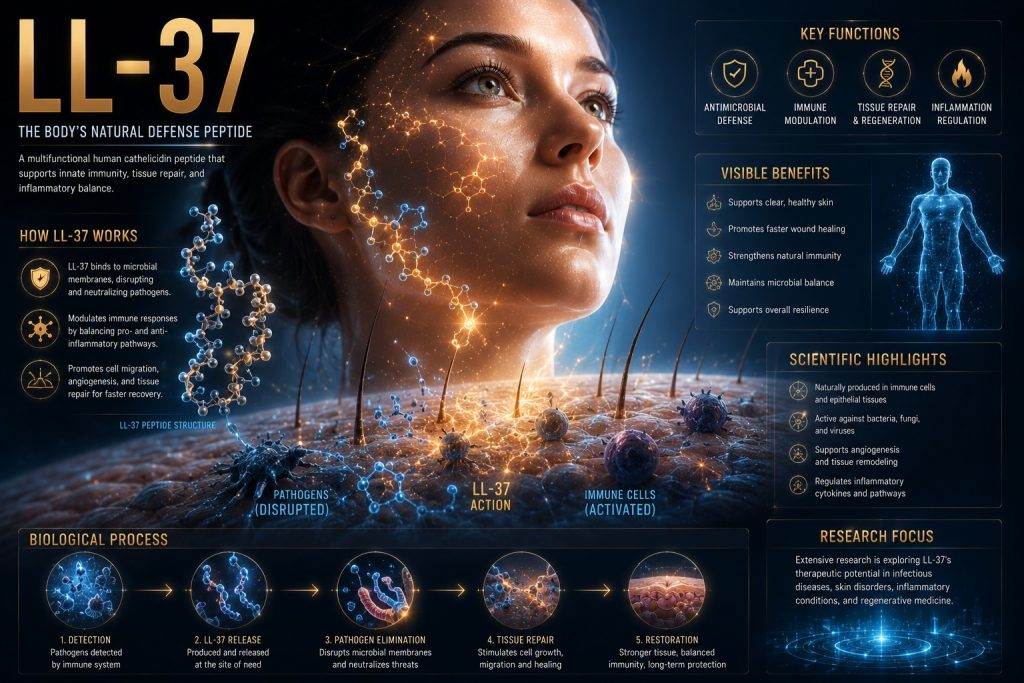
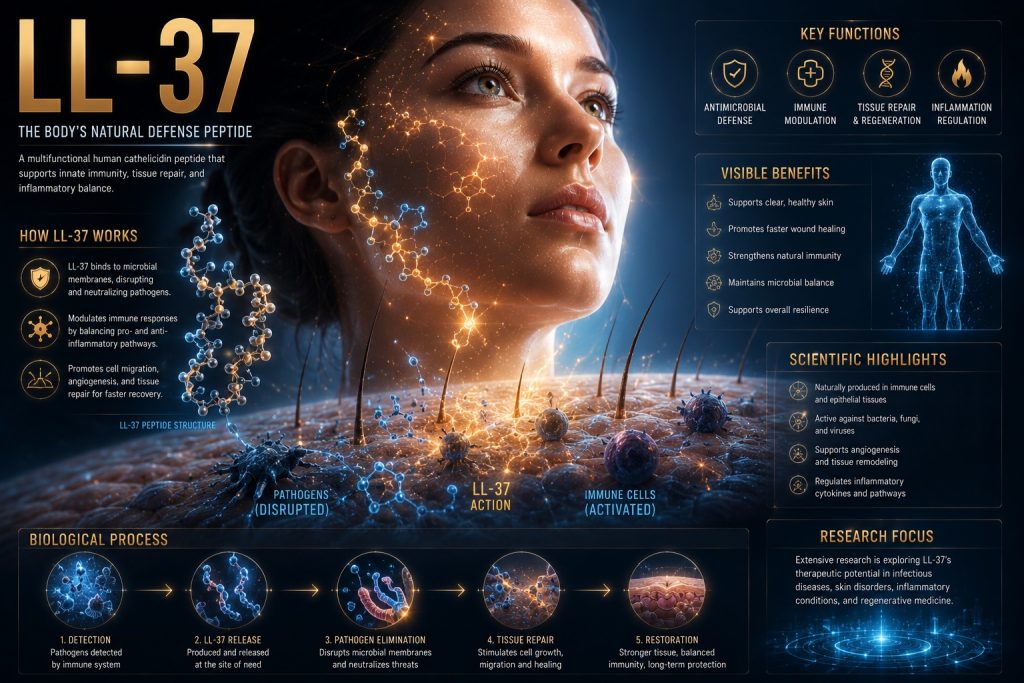
The human body produces a variety of peptides that help regulate immunity, protect against pathogens, and support tissue repair. One of the most extensively studied antimicrobial peptides is LL-37, the only member of the human cathelicidin family.
LL-37 has attracted significant scientific interest because of its broad role in the innate immune system. Researchers are investigating its ability to support the body’s natural defenses, regulate inflammation, promote wound healing, and maintain healthy tissue function.
This article explores what LL-37 is, how it works, and what current scientific research suggests about its potential applications.
What Is LL-37?
LL-37 is a naturally occurring antimicrobial peptide (AMP) produced by various cells throughout the body, including:
- White blood cells
- Skin cells
- Respiratory tract cells
- Gastrointestinal epithelial cells
It is derived from a larger protein known as human cathelicidin antimicrobial peptide (hCAP-18).
As part of the innate immune system, LL-37 serves as one of the body’s first lines of defense against environmental challenges while also helping regulate tissue repair and inflammatory responses.
How Does LL-37 Work?
Supporting Innate Immune Defense
LL-37 helps support the body’s natural immune response by interacting with components of the innate immune system.
Researchers continue to study how LL-37 contributes to maintaining normal immune function and supporting the body’s response to environmental stressors.
Antimicrobial Activity
One of LL-37’s defining characteristics is its broad-spectrum antimicrobial activity.
Laboratory research has demonstrated activity against various microorganisms, including:
- Certain bacteria
- Some viruses
- Selected fungi
Scientists continue to investigate how these properties contribute to normal immune defense and tissue health.
Supporting Wound Healing
Healthy tissue repair requires coordinated communication between immune cells and structural cells.
Research suggests LL-37 may support biological processes involved in:
- Cellular migration
- Tissue remodeling
- Skin repair
- Normal wound-healing responses
Regulating Inflammatory Responses
Inflammation is a normal part of the body’s healing process.
Researchers are studying whether LL-37 helps regulate inflammatory signaling to support balanced immune activity while promoting tissue recovery.
Potential Benefits of LL-37
1. Immune System Support
LL-37 plays an important role in the body’s innate immune system.
Researchers are investigating its potential to support healthy immune function and maintain normal defense mechanisms.
2. Wound Healing
One of the primary areas of LL-37 research involves tissue repair.
Scientists continue to explore whether LL-37 may support:
- Skin regeneration
- Cellular repair
- Healthy wound healing
- Tissue remodeling
3. Skin Health
Healthy skin depends on effective immune protection and continuous cellular renewal.
Research suggests LL-37 may contribute to maintaining healthy skin by supporting normal repair processes and barrier function.
4. Healthy Inflammatory Balance
Researchers continue to investigate LL-37’s role in regulating inflammatory signaling pathways involved in tissue maintenance and recovery.
Maintaining balanced inflammatory responses is essential for long-term tissue health.
5. Regenerative Medicine
Because of its involvement in immune regulation and tissue repair, LL-37 has become an important area of regenerative medicine research.
Scientists continue to study its potential applications in supporting recovery following tissue injury and promoting healthy regeneration.
LL-37 and the Innate Immune System
The innate immune system provides rapid protection against environmental challenges before the adaptive immune system becomes fully activated.
LL-37 contributes to this early defense by supporting:
- Immune cell communication
- Antimicrobial activity
- Tissue repair
- Regulation of inflammatory responses
- Maintenance of healthy epithelial barriers
These diverse functions make LL-37 one of the most extensively studied antimicrobial peptides in human biology.
Current Research
Scientific investigations involving LL-37 continue to explore its potential role in:
- Immune function
- Wound healing
- Skin regeneration
- Antimicrobial defense
- Inflammatory regulation
- Tissue repair
- Regenerative medicine
While laboratory and preclinical findings have shown encouraging results, additional human clinical studies are needed to better understand LL-37’s long-term safety, effectiveness, and therapeutic applications.
Current evidence should be viewed as promising but not yet conclusive.
Safety and Considerations
Several important considerations remain:
- Human clinical research is ongoing.
- Long-term safety continues to be evaluated.
- Individual responses may vary.
- Additional studies are necessary to determine appropriate therapeutic applications.
Anyone considering peptide-based therapies should consult a qualified healthcare professional.
Frequently Asked Questions
What is LL-37?
LL-37 is a naturally occurring antimicrobial peptide produced by the human body that plays an important role in innate immune defense, tissue repair, and inflammatory regulation.
What is LL-37 being studied for?
Researchers are investigating LL-37 for its potential role in immune health, wound healing, skin regeneration, tissue repair, and regenerative medicine.
Is LL-37 an antibiotic?
No. LL-37 is not an antibiotic medication. It is a naturally occurring antimicrobial peptide that is part of the body’s innate immune system.
Why is LL-37 important?
LL-37 contributes to normal immune defense, supports tissue repair, and helps regulate inflammatory responses, making it an important subject of biomedical research.
Is LL-37 approved for medical use?
LL-37 remains an investigational peptide in many research settings, and additional clinical studies are needed to determine its potential therapeutic applications.
Final Thoughts
LL-37 is one of the body’s most important naturally occurring antimicrobial peptides, serving as a key component of the innate immune system. Its potential roles in immune defense, wound healing, inflammation regulation, and tissue regeneration have made it a major focus of modern biomedical research.
Although early findings are promising, additional clinical studies are required to fully understand its long-term safety and effectiveness. As research continues to evolve, LL-37 remains an exciting area of investigation in immunology, regenerative medicine, and healthy tissue maintenance.
Disclaimer
This article is provided for educational and informational purposes only. LL-37 is an investigational peptide, and scientific understanding of its effects continues to evolve. This content is not intended to diagnose, treat, cure, or prevent any disease and should not be considered medical advice. Always consult a qualified healthcare professional regarding health-related decisions.