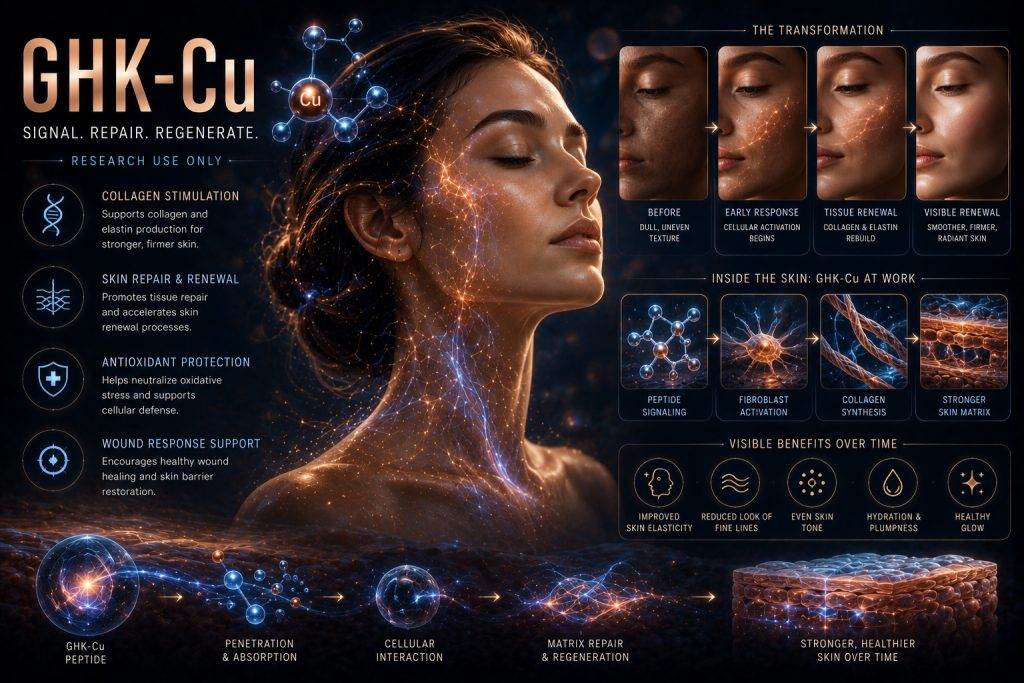
In the world of regenerative skincare and anti-aging science, few compounds have generated as much excitement as GHK-Cu — a naturally occurring copper peptide recognized for its remarkable ability to stimulate healing, improve skin quality, and support tissue regeneration.
Originally discovered during research on wound healing and liver regeneration, GHK-Cu has since emerged as one of the most promising bioactive peptides in cosmetic and medical science.
Unlike many skincare ingredients that only address surface-level concerns, GHK-Cu works deeply at the cellular level to:
→ Stimulate collagen and elastin production
→ Improve skin firmness and elasticity
→ Reduce inflammation and oxidative stress
→ Accelerate wound healing and tissue repair
→ Support healthy skin regeneration
This guide explores:
→ What GHK-Cu is
→ How it works
→ Benefits for skin health and healing
→ Its role in wound repair and anti-aging
→ How it compares to other peptides
→ Best skincare practices and safety considerations
→ Future medical and cosmetic applications
What Is GHK-Cu?
GHK-Cu stands for:
→ Glycyl-L-histidyl-L-lysine copper complex
It is a naturally occurring tripeptide bound to copper ions and is found throughout the human body, particularly in:
→ Blood plasma
→ Saliva
→ Urine
First identified by Dr. Loren Pickart during studies on tissue repair, GHK-Cu was later shown to possess broad regenerative and anti-inflammatory properties that extend far beyond basic wound healing.
Why GHK-Cu Matters
As humans age, natural levels of GHK-Cu decline significantly.
This reduction may contribute to:
→ Wrinkles and skin thinning
→ Slower healing
→ Reduced collagen production
→ Loss of elasticity
→ Increased inflammation and oxidative damage
Because of its regenerative properties, GHK-Cu has become a major focus in:
→ Anti-aging skincare
→ Dermatology
→ Regenerative medicine
→ Hair restoration research
→ Wound healing therapies
The Science Behind GHK-Cu: How It Works
GHK-Cu works through multiple overlapping biological mechanisms, which is why it is considered one of the most multifunctional peptides in skincare science.
→ Stimulates Collagen and Elastin Production
One of GHK-Cu’s most important actions is enhancing production of:
→ Collagen
→ Elastin
→ Glycosaminoglycans
These molecules are essential for:
→ Skin firmness
→ Elasticity
→ Structural support
→ Smooth texture
GHK-Cu also suppresses matrix metalloproteinases (MMPs), enzymes responsible for collagen degradation.
→ Antioxidant Protection
GHK-Cu helps neutralize:
→ Free radicals
→ Environmental oxidative stress
→ UV-induced cellular damage
This antioxidant activity helps preserve:
→ Skin integrity
→ Cellular health
→ Long-term tissue resilience
→ Anti-Inflammatory Activity
Chronic inflammation accelerates:
→ Aging
→ Tissue breakdown
→ Skin sensitivity
GHK-Cu helps regulate inflammatory cytokines, including:
→ IL-6
→ TNF-α
This may reduce:
→ Redness
→ Irritation
→ Reactive skin responses
→ Gene Expression Modulation
One of GHK-Cu’s most unique features is its ability to influence gene expression related to:
→ Tissue repair
→ Growth signaling
→ Inflammation control
→ Cellular regeneration
Research suggests it may regulate dozens of genes associated with youthful tissue function and repair.
Benefits of GHK-Cu for Skin Health
→ Improves Skin Firmness and Reduces Wrinkles
GHK-Cu supports dermal remodeling by:
→ Increasing skin density
→ Improving elasticity
→ Reducing fine lines and wrinkles
These effects are closely tied to its collagen-enhancing properties.
→ Brightens Skin and Reduces Hyperpigmentation
GHK-Cu may help:
→ Fade dark spots
→ Reduce uneven pigmentation
→ Promote a brighter complexion
By modulating melanocyte activity and inflammatory signaling.
→ Enhances Skin Barrier Function
The peptide strengthens the epidermal barrier, helping improve:
→ Moisture retention
→ Protection against irritants
→ Resilience against environmental stressors
→ Supports Inflammatory Skin Conditions
Its anti-inflammatory properties may benefit conditions such as:
→ Acne
→ Rosacea
→ Eczema
→ Sensitive skin states
GHK-Cu and Wound Healing
One of the reasons GHK-Cu became famous in regenerative medicine is its remarkable wound-healing activity.
→ Accelerates Healing Phases
GHK-Cu supports all major stages of wound repair:
→ Hemostasis
→ Inflammation
→ Proliferation
→ Remodeling
→ Promotes Angiogenesis
GHK-Cu stimulates:
→ VEGF signaling
→ Blood vessel formation
→ Nutrient delivery to damaged tissue
This improved circulation accelerates tissue regeneration.
→ Stimulates Cell Proliferation
GHK-Cu increases activity of:
→ Fibroblasts
→ Keratinocytes
Which are essential for:
→ Collagen synthesis
→ Epidermal repair
→ Faster wound closure
→ Regulates Tissue Remodeling
During later healing stages, GHK-Cu helps balance:
→ Matrix metalloproteinases (MMPs)
→ Tissue inhibitors of metalloproteinases (TIMPs)
This supports:
→ Better scar quality
→ Stronger tissue regeneration
→ Improved structural remodeling
Why GHK-Cu Stands Out Among Peptides
Many peptides only stimulate collagen or act on a single receptor pathway.
GHK-Cu is different because it combines:
→ Regenerative signaling
→ Antioxidant defense
→ Anti-inflammatory effects
→ Gene modulation
→ Tissue repair support
The Importance of Copper
The copper ion itself is biologically important because copper contributes to:
→ Collagen cross-linking
→ Energy metabolism
→ Immune regulation
→ Angiogenesis
This is one reason GHK-Cu may outperform non-copper peptides for regenerative applications.
How to Use GHK-Cu in a Skincare Routine
→ Product Types
Common forms include:
→ Serums
→ Creams
→ Masks
→ Scalp treatments
→ Application Steps
Typical routine:
Cleanse skin thoroughly
Apply GHK-Cu serum or cream
Massage gently into skin
Follow with moisturizer if needed
Most users apply:
→ Twice daily (morning and night)
→ Helpful Ingredient Pairings
GHK-Cu often works well alongside:
→ Hyaluronic acid
→ Niacinamide
→ Vitamin C
→ Barrier-support ingredients
Potential Side Effects and Safety
GHK-Cu is generally considered very safe and well tolerated.
→ Possible Mild Reactions
Some individuals may experience:
→ Redness
→ Itching
→ Mild irritation
Especially when first starting use.
→ Patch Testing
Sensitive users should:
→ Test on a small skin area first
→ Monitor for 24 hours before full-face application
→ Pregnancy and Medical Conditions
Because research remains limited:
→ Pregnant or breastfeeding individuals should consult a healthcare professional before use
The Future of GHK-Cu in Medicine and Cosmetics
Research continues exploring GHK-Cu in areas such as:
→ Advanced wound care
→ Burn recovery
→ Hair restoration
→ Chronic inflammatory disease
→ Regenerative medicine
→ Anti-aging therapies
Advanced Delivery Systems
Scientists are investigating:
→ Liposomal GHK-Cu
→ Nanoparticle delivery systems
To improve penetration and efficacy in deeper skin layers.
GHK-Cu for Hair Restoration
Research suggests GHK-Cu may also support:
→ Follicle regeneration
→ Hair thickness
→ Anagen-phase activity
→ Scalp repair
Making it increasingly popular in regenerative hair protocols.