Vitamin B12: An Essential Nutrient for Energy, Brain Function, and Overall Health
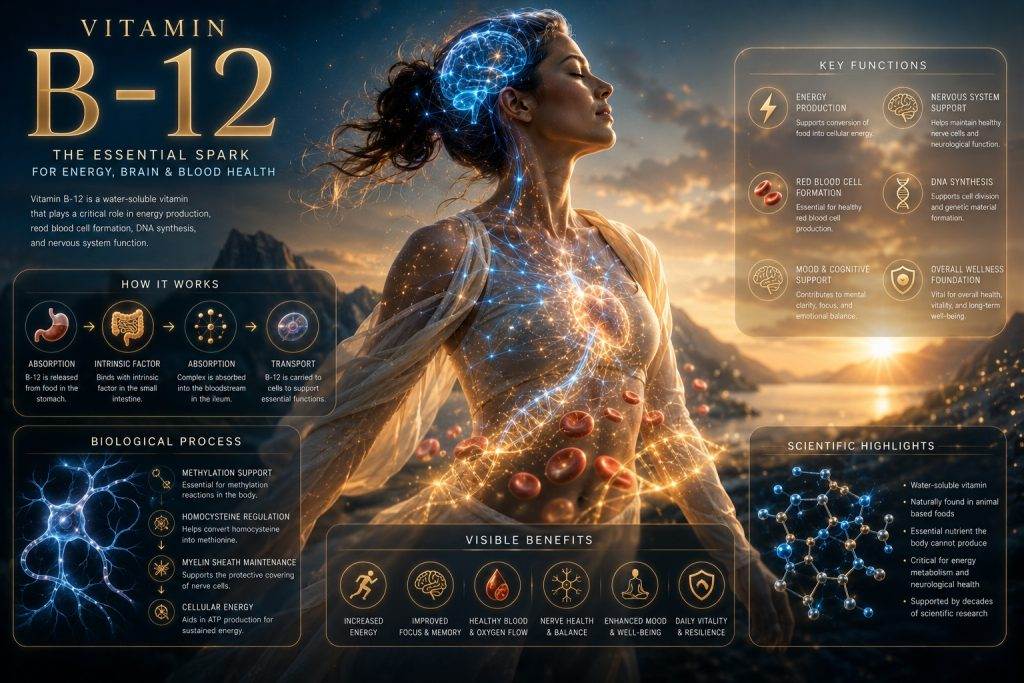
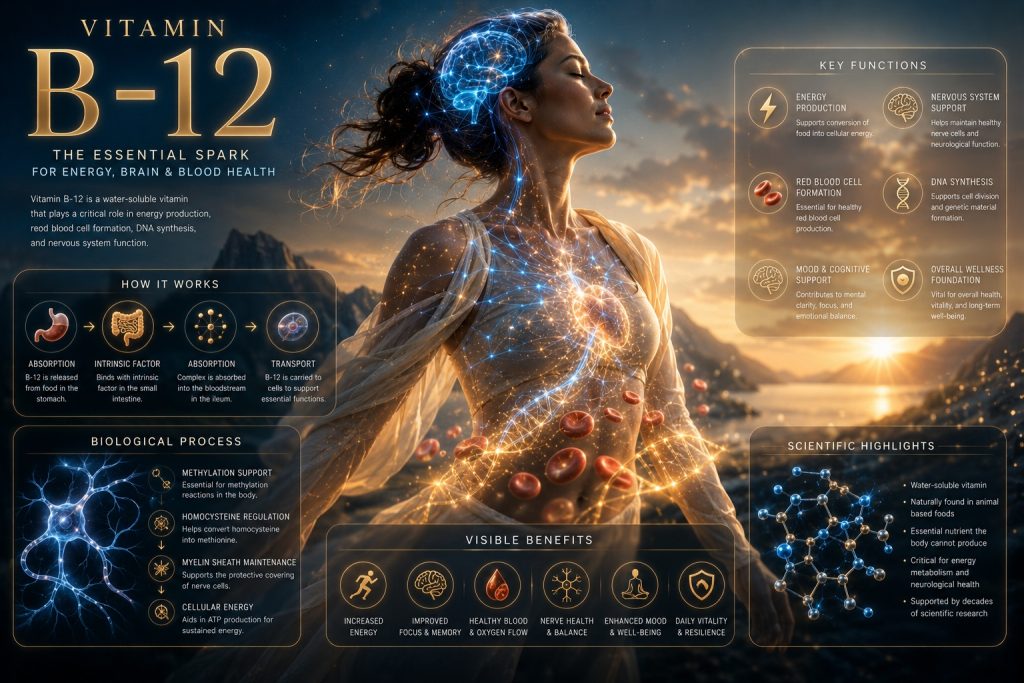
Vitamin B12 is one of the most important nutrients required for maintaining healthy nerves, producing red blood cells, supporting DNA synthesis, and converting food into usable energy. Also known as cobalamin, Vitamin B12 is a water-soluble vitamin that plays a vital role in nearly every cell of the body.
Because the human body cannot produce Vitamin B12 on its own, it must be obtained through diet or supplementation. Researchers continue to study its role in neurological health, cardiovascular function, healthy aging, and energy metabolism.
This article explores what Vitamin B12 is, how it works, and what current scientific evidence suggests about its many health benefits.
What Is Vitamin B12?
Vitamin B12 is an essential water-soluble B vitamin required for numerous biological processes.
It is naturally found in animal-based foods such as:
- Meat
- Fish
- Poultry
- Eggs
- Milk and dairy products
It is also available in fortified foods and dietary supplements for individuals who may not obtain enough through diet alone.
Several forms of Vitamin B12 are used in supplements and medical practice, including:
- Methylcobalamin
- Cyanocobalamin
- Hydroxocobalamin
- Adenosylcobalamin
Each form ultimately helps meet the body’s Vitamin B12 requirements.
How Does Vitamin B12 Work?
Supporting Red Blood Cell Formation
Vitamin B12 is essential for the production of healthy red blood cells.
Without adequate Vitamin B12, red blood cells may develop abnormally, reducing their ability to transport oxygen efficiently throughout the body.
DNA Synthesis
Every cell in the body depends on DNA replication for growth and repair.
Vitamin B12 works alongside folate to support healthy DNA synthesis and normal cell division.
Nervous System Function
Vitamin B12 helps maintain the protective myelin sheath surrounding nerve fibers.
Healthy myelin supports efficient communication between the brain, spinal cord, and peripheral nerves.
Researchers continue to investigate the vitamin’s role in maintaining long-term neurological health.
Energy Production
Vitamin B12 plays an important role in converting carbohydrates, fats, and proteins into usable cellular energy.
Although it does not directly provide energy, adequate B12 supports the metabolic processes that help the body produce ATP, the primary energy currency of cells.
Potential Benefits of Vitamin B12
1. Energy Metabolism
Vitamin B12 supports normal energy production by participating in cellular metabolic pathways.
Individuals with a Vitamin B12 deficiency may experience fatigue related to impaired red blood cell production and reduced oxygen delivery.
2. Brain Health
Researchers continue to study Vitamin B12 for its role in supporting:
- Memory
- Cognitive function
- Healthy nerve signaling
- Neurological health
Adequate intake is important throughout life, particularly in older adults.
3. Healthy Nervous System
Vitamin B12 contributes to maintaining healthy nerve tissue by supporting myelin production.
This is essential for efficient communication throughout the nervous system.
4. Cardiovascular Health
Vitamin B12 helps regulate homocysteine, an amino acid involved in cardiovascular health.
Together with vitamins B6 and folate, adequate Vitamin B12 helps maintain normal homocysteine metabolism.
5. Red Blood Cell Production
Healthy red blood cells are necessary for transporting oxygen throughout the body.
Vitamin B12 plays a critical role in producing properly formed red blood cells and supporting overall blood health.
6. Healthy Pregnancy
Adequate Vitamin B12 is important during pregnancy because it supports normal fetal nervous system development and healthy DNA synthesis.
Expectant mothers should follow guidance from qualified healthcare professionals regarding appropriate nutritional intake.
Vitamin B12 Deficiency
Because Vitamin B12 is essential for many bodily functions, deficiency can affect multiple systems.
Common causes include:
- Low dietary intake
- Reduced stomach acid production
- Certain gastrointestinal conditions
- Pernicious anemia
- Reduced absorption with aging
- Long-term use of certain medications
Potential symptoms may include:
- Fatigue
- Weakness
- Numbness or tingling in the hands and feet
- Difficulty with balance
- Memory problems
- Pale skin
A healthcare professional can diagnose Vitamin B12 deficiency through appropriate evaluation and laboratory testing.
Food Sources of Vitamin B12
Vitamin B12 is naturally abundant in many animal-based foods, including:
- Beef
- Liver
- Salmon
- Tuna
- Clams
- Eggs
- Milk
- Yogurt
- Cheese
Fortified breakfast cereals and plant-based milk alternatives may also provide Vitamin B12.
Individuals following vegetarian or vegan diets may benefit from fortified foods or supplementation, depending on their nutritional needs.
Current Research
Scientific investigations involving Vitamin B12 continue to explore its role in:
- Brain health
- Cognitive aging
- Neurological disorders
- Cardiovascular health
- Energy metabolism
- Healthy aging
- DNA synthesis
Vitamin B12 remains one of the most extensively studied nutrients in clinical medicine due to its essential role in human health.
Safety and Considerations
Vitamin B12 is generally considered safe when consumed at recommended dietary levels or under the guidance of a healthcare professional.
Important considerations include:
- Individual nutritional needs vary.
- Deficiency should be evaluated by a qualified healthcare provider.
- Certain medical conditions may affect absorption.
- Supplementation should be tailored to individual health needs.
Frequently Asked Questions
What is Vitamin B12?
Vitamin B12 is an essential water-soluble vitamin that supports red blood cell formation, nervous system function, DNA synthesis, and energy metabolism.
What does Vitamin B12 do?
It helps produce healthy red blood cells, supports nerve health, contributes to DNA synthesis, and assists in converting food into usable cellular energy.
Can Vitamin B12 increase energy?
Vitamin B12 supports normal energy metabolism. In people with a deficiency, correcting low B12 levels may help improve fatigue related to the deficiency.
Who is at risk for Vitamin B12 deficiency?
Older adults, individuals following vegetarian or vegan diets, people with absorption disorders, and those taking certain medications may have a higher risk of deficiency.
Is Vitamin B12 safe?
Vitamin B12 is generally considered safe when consumed appropriately. Individuals with medical concerns should consult a qualified healthcare professional before starting supplementation.
Final Thoughts
Vitamin B12 is an essential nutrient that supports energy metabolism, brain function, nerve health, DNA synthesis, and red blood cell production. Because it plays such a fundamental role in human physiology, maintaining adequate Vitamin B12 levels is important throughout every stage of life.
Ongoing research continues to expand our understanding of Vitamin B12’s role in healthy aging, neurological health, and overall wellness. Whether obtained through a balanced diet or supplementation when appropriate, Vitamin B12 remains a cornerstone of good nutritional health.
Disclaimer
This article is provided for educational and informational purposes only. It is not intended to diagnose, treat, cure, or prevent any disease and should not be considered medical advice. Always consult a qualified healthcare professional before making decisions about your health, diet, or supplementation