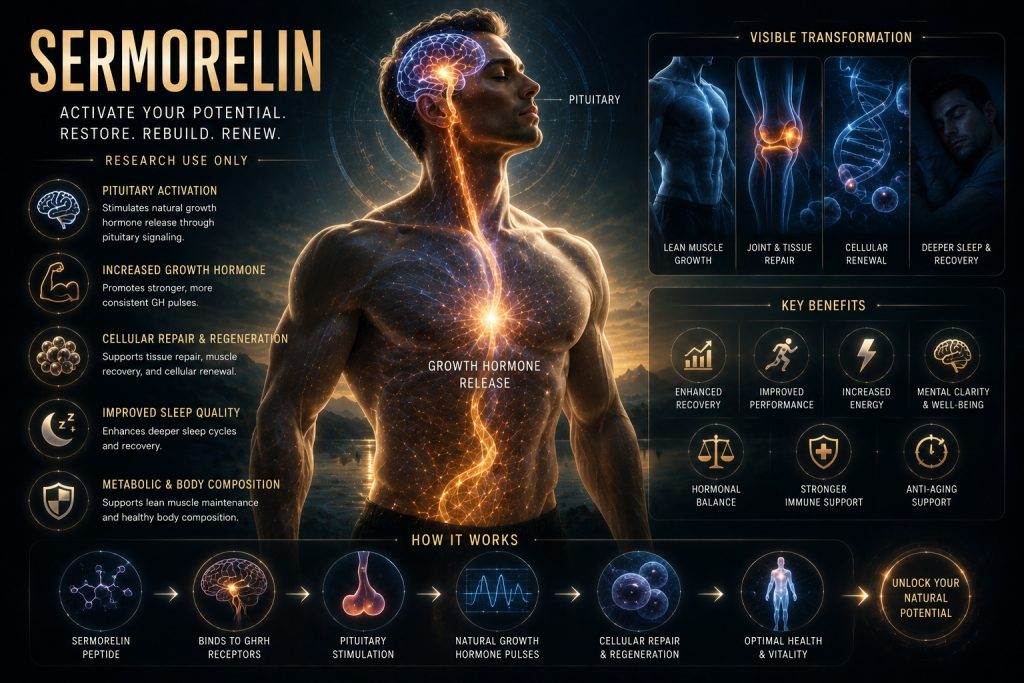
Sermorelin is a growth hormone–releasing peptide that has gained renewed attention in the worlds of hormone optimization, recovery, anti-aging medicine, and body composition enhancement. Originally developed as a treatment for growth hormone deficiency, Sermorelin is now commonly discussed by individuals looking to support natural growth hormone production without relying on synthetic Human Growth Hormone (HGH).
Unlike HGH injections, which introduce growth hormone directly into the body, Sermorelin works by stimulating the pituitary gland to release more of your own endogenous growth hormone. This more physiologic approach helps preserve the body’s natural feedback systems while supporting healthy hormone production.
In this guide, we’ll cover:
What Sermorelin is
How Sermorelin works
Benefits of Sermorelin
How it compares to other growth peptides
Dosage and administration
Side effects and safety
Legal considerations
What Is Sermorelin?
Sermorelin is a synthetic peptide composed of the first 29 amino acids of Growth Hormone-Releasing Hormone (GHRH), often referred to as GRF 1-29. This segment represents the biologically active portion responsible for stimulating growth hormone release from the anterior pituitary gland.
Originally approved under the brand name Geref for evaluating growth hormone deficiency in children, Sermorelin later became popular in hormone optimization clinics due to its ability to stimulate natural growth hormone production. Although the original commercial product was discontinued, Sermorelin remains available through compounding pharmacies and specialized medical providers.
Unlike synthetic HGH, Sermorelin works upstream in the hormonal pathway, encouraging your body to produce growth hormone naturally rather than replacing it.
How Sermorelin Works
Sermorelin functions by mimicking the body’s natural Growth Hormone-Releasing Hormone.
Once administered, it binds to GHRH receptors located in the anterior pituitary gland, triggering a pulse of growth hormone release into circulation.
The process works as follows:
Step 1: Pituitary Stimulation
Sermorelin binds to GHRH receptors on the pituitary gland.
This signals the body to release stored growth hormone naturally.
Step 2: Growth Hormone Release
The pituitary releases growth hormone in a pulsatile pattern similar to normal physiology.
Unlike synthetic HGH, Sermorelin does not override the body’s feedback mechanisms.
Step 3: Increased IGF-1 Production
Growth hormone stimulates the liver to produce Insulin-Like Growth Factor-1 (IGF-1).
IGF-1 plays an important role in:
Muscle repair
Recovery
Fat metabolism
Tissue regeneration
Cellular growth
This natural cascade is one reason many practitioners prefer Sermorelin over direct HGH therapy.
Benefits of Sermorelin
Because Sermorelin stimulates natural growth hormone production, it may support several areas of performance, recovery, and healthy aging.
Increased Natural HGH and IGF-1 Levels
One of the primary benefits of Sermorelin is supporting physiologic growth hormone production.
Potential benefits include:
Improved hormonal balance
Enhanced recovery
Better tissue repair
Increased IGF-1 production
Unlike HGH therapy, Sermorelin encourages the body to regulate its own hormone output.
Improved Recovery and Muscle Repair
Growth hormone and IGF-1 are heavily involved in:
Protein synthesis
Muscle recovery
Collagen production
Soft tissue repair
Potential benefits include:
Faster workout recovery
Improved healing
Better training adaptation
This is one reason Sermorelin is frequently discussed among active individuals and athletes.
Better Sleep Quality
Growth hormone secretion naturally peaks during deep sleep.
By supporting natural GH release, Sermorelin may contribute to:
Improved sleep quality
Enhanced recovery overnight
Better energy levels
Improved restorative sleep cycles
Many users report sleep improvements before noticing body composition changes.
Fat Loss and Body Composition Support
Growth hormone plays an important role in fat metabolism.
Potential benefits include:
Increased lipolysis
Improved fat utilization
Better body recomposition
Lean muscle preservation
This makes Sermorelin popular among individuals seeking fat loss while maintaining muscle mass.
Healthy Aging Support
Growth hormone levels naturally decline with age.
This decline may contribute to:
Slower recovery
Increased body fat
Reduced energy
Loss of lean muscle mass
Sermorelin may help support healthy aging by restoring more youthful growth hormone signaling patterns.
Cognitive and Wellness Benefits
Some practitioners report potential improvements in:
Mental clarity
Energy levels
Mood
Overall vitality
These benefits are thought to be associated with improved sleep, recovery, and hormonal balance.
Sermorelin vs Other Growth Peptides
Several peptides are commonly used to support growth hormone production.
Sermorelin vs CJC-1295
CJC-1295 is a longer-acting GHRH analog.
Sermorelin
Short half-life
Mimics natural GH pulses
More physiologic release pattern
CJC-1295
Extended half-life
Longer GH stimulation
Less frequent dosing
Sermorelin is often preferred by those seeking a more natural growth hormone rhythm.
Sermorelin vs Ipamorelin
Ipamorelin stimulates growth hormone through ghrelin receptors rather than GHRH receptors.
Sermorelin
Increases amplitude of GH pulses
Ipamorelin
Increases frequency of GH release
Many protocols combine the two peptides because they work through complementary pathways.
Sermorelin vs Tesamorelin
Tesamorelin is another GHRH analog.
Tesamorelin
FDA-approved for HIV-associated lipodystrophy
Strong visceral fat reduction data
Sermorelin
Broader use in anti-aging and recovery settings
More common in hormone optimization programs
Sermorelin Dosage and Administration
Sermorelin is typically administered through subcutaneous injection.
Common dosing ranges include:
Beginners
100 mcg daily
General Wellness and Anti-Aging
200 mcg daily
Recovery and Performance Support
250–300 mcg daily
Most protocols recommend administration:
Before bedtime
On an empty stomach
At least 2 hours after eating
Nighttime dosing aligns with the body’s natural growth hormone pulse.
Side Effects and Safety
Sermorelin is generally considered well tolerated because it stimulates natural hormone production rather than replacing growth hormone directly.
Common Side Effects
Potential side effects include:
Injection-site redness
Mild swelling
Headache
Temporary flushing
Fatigue
Lightheadedness
Most side effects are mild and temporary.
Rare Side Effects
Less commonly reported effects include:
Elevated cortisol
Increased prolactin
Hormonal fluctuations in sensitive individuals
These effects are generally associated with excessive dosing or preexisting endocrine conditions.
Who Should Avoid Sermorelin?
Sermorelin may not be appropriate for:
Pregnant or breastfeeding individuals
Those with active cancers
Individuals with untreated endocrine disorders
Medical supervision is recommended before beginning any hormone-based therapy.
Legal Status
In the United States:
Sermorelin is prescription-only
Commonly available through hormone optimization clinics
Often compounded by licensed pharmacies
While it is not classified as an anabolic steroid, athletes should be aware that increases in growth hormone and IGF-1 levels may create issues in organizations governed by the World Anti-Doping Agency or other anti-doping agencies.
Conclusion
Sermorelin is one of the most widely used growth hormone–releasing peptides available today. By stimulating the body’s own production of growth hormone, it offers a more physiologic alternative to synthetic HGH while supporting recovery, body composition, sleep quality, and healthy aging.
Potential benefits include:
Increased natural GH production
Enhanced IGF-1 levels
Improved recovery
Better sleep quality
Increased fat metabolism
Lean muscle preservation
Healthy aging support
For individuals interested in optimizing growth hormone function while maintaining natural hormonal regulation, Sermorelin remains one of the most researched and commonly prescribed peptide options available.